
 By
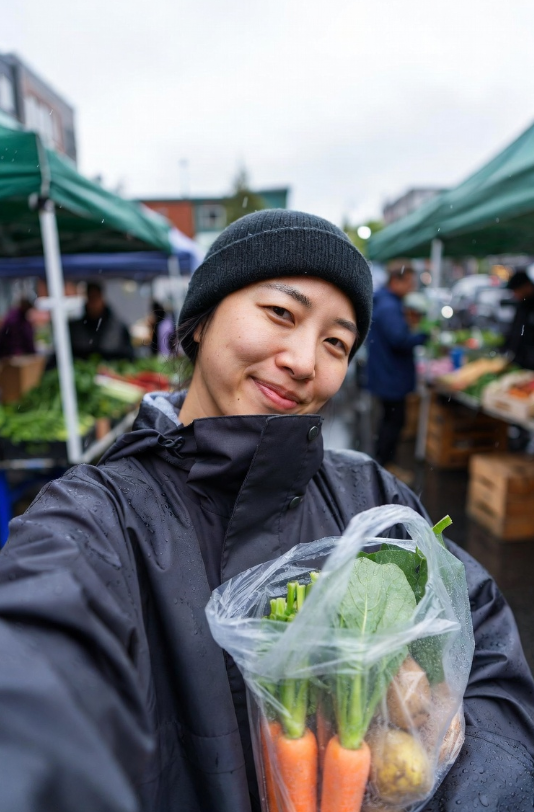
By I have become a person who orders groceries online. This is not, in the grand scheme of pandemic adjustments, a meaningful sacrifice ╬ôçö people are dying, hospitals are overflowing, the world is rewriting itself in real time ╬ôçö but for me, the woman who walks every aisle of H Mart with the reverence of a pilgrim, who picks up each daikon and inspects it like a jeweler examining a stone, online grocery ordering feels like a small death. You cannot smell gochugaru through a screen. You cannot squeeze a pear through a delivery app. And yet. The napa cabbage arrived Wednesday, and it was fine. Not the one I would have chosen, but fine. I made kimchi with it anyway, because kimchi does not require perfection. Kimchi requires salt, time, and the willingness to let something transform.
James has taken over the living room with a whiteboard he bought from Amazon ╬ôçö his own employer's competitor, which he finds hilarious and I find treasonous. He maps out product roadmaps on it during the day and erases them at night so our apartment doesn't look like a startup incubator. I told him the whiteboard smells like chemicals. He told me the fermenting kimchi smells like a biohazard. We are in love.
Thursday night I made sundubu-jjigae ╬ôçö soft tofu stew, the kind that comes to the table still bubbling, an egg cracked into the volcanic center. I used the silken tofu from the online order, which was miraculously unbroken, and anchovy stock I'd made last week and frozen in ice cube trays like a person who has her life together, which I do not, but the stock cubes suggest otherwise. The stew was fiery and good. James ate it with rice and the last of the kimchi from the previous batch ╬ôçö the kimchi that had been fermenting for three weeks and had reached that perfect sour tang that means it's alive, really alive, teeming with the bacteria that Korean grandmothers have cultivated for centuries without knowing the word lactobacillus.
Dr. Yoon on Friday. We talked about control ╬ôçö how the pandemic has stripped it away and how I'm using cooking to get it back. She said, "You're not wrong to find comfort in the kitchen. Just notice if the comfort becomes a fortress." I'm noticing. The kitchen is comfort. The kitchen is also the only room where I know exactly what's going to happen, because I control the ingredients and the heat and the time, and the world outside controls nothing, offers nothing, promises nothing. The stew bubbles. The kimchi ferments. I wait.
The sundubu-jjigae I made that Thursday is not a recipe I can hand you — it lives in muscle memory, in the smell of anchovy stock defrosting, in the particular way I crack an egg one-handed into a bubbling clay pot. But this Asian vegetable-beef soup is close in spirit: the same insistence on heat, on depth, on a broth that demands your full attention for a moment and then rewards you with something that feels almost like stillness. Make it on a hard week. Eat it with rice. Let it bubble.
Asian Vegetable-Beef Soup
Prep Time: 15 min | Cook Time: 35 min | Total Time: 50 min | Servings: 4
Ingredients
- 1 lb beef sirloin or flank steak, thinly sliced against the grain
- 2 tablespoons soy sauce, divided
- 1 tablespoon sesame oil, divided
- 1 tablespoon vegetable oil
- 3 cloves garlic, minced
- 1 tablespoon fresh ginger, grated
- 1/2 teaspoon red pepper flakes (or to taste)
- 6 cups beef broth
- 2 tablespoons rice vinegar
- 1 tablespoon fish sauce
- 2 cups napa cabbage, roughly chopped
- 1 cup shiitake or cremini mushrooms, sliced
- 1 medium carrot, julienned or thinly sliced
- 2 green onions, sliced (whites and greens separated)
- 1 cup firm tofu, cubed (optional)
- Salt and white pepper, to taste
- Cooked white rice, for serving
Instructions
- Marinate the beef. In a bowl, toss the sliced beef with 1 tablespoon soy sauce and 1/2 tablespoon sesame oil. Let it sit for at least 10 minutes while you prep the vegetables.
- Build the aromatics. Heat vegetable oil in a large pot or Dutch oven over medium-high heat. Add the white parts of the green onion, garlic, and ginger. Cook, stirring, for about 1 minute until fragrant. Add red pepper flakes and stir for 30 seconds more.
- Sear the beef. Add the marinated beef to the pot in a single layer. Let it sear undisturbed for 1–2 minutes, then stir and cook until just browned on the outside, about 2 minutes total. The beef does not need to be fully cooked through at this stage.
- Add broth and season. Pour in the beef broth, remaining 1 tablespoon soy sauce, rice vinegar, and fish sauce. Bring to a boil, then reduce heat to a steady simmer.
- Add the vegetables. Stir in the carrots and mushrooms and simmer for 8 minutes. Add the napa cabbage and tofu (if using) and simmer for another 5–7 minutes, until the cabbage is tender but still has some texture.
- Finish and adjust. Stir in the remaining 1/2 tablespoon sesame oil. Taste and adjust with salt, white pepper, or an extra splash of rice vinegar for brightness.
- Serve. Ladle into bowls over steamed white rice and top with the green parts of the sliced green onion.
Nutrition (per serving)
Calories: 310 | Protein: 28g | Fat: 14g | Carbs: 14g | Fiber: 3g | Sodium: 980mg