New Year. The house emptied on December 27 — Anna's family back to Minneapolis, Peter back to Chicago (he stayed three days, which is more than last year and I'm counting that as progress), Elsa back to Ely and the wolves. By New Year's Eve it was just Paul and me and Sven, which is exactly who I wanted to ring in the new year with.
We stayed up until midnight. Paul made hot toddies — whiskey, honey, lemon, hot water — and we sat on the couch with Sven between us and watched the New York countdown on television and I thought about how New Year's in Duluth is nothing like New Year's in New York and that's perfectly fine because I have no desire to stand in Times Square in the cold when I can stand in my living room in the cold, which is warmer.
At midnight Paul kissed me and said, "Another year, Linda." I said, "Another year, Paul." It's not poetry. It's better than poetry. It's thirty years of the same man saying the same thing at the same moment and meaning it more each time.
The first week of January is always a letdown. The decorations come down. The cookie tins empty. The house returns to its regular dimensions after the expansion of Christmas. I took down the tree on Monday — Paul carried it to the curb, trailing needles across the floor that Sven investigated with forensic interest — and I packed the ornaments in the boxes labeled in my handwriting from 1990 and put them in the closet and the living room looked naked and ordinary.
I went back to work on Tuesday. Three shifts this week, twelve hours each. January is a hard month in oncology — the holidays are over, and patients who were holding on for Christmas sometimes stop holding on in January. I had two patients decline sharply this week. I held one woman's hand at four AM while she cried and I said what I always say: "I'm here." Two words. The most useful two words in nursing.
I made a New Year's dinner on Sunday: roast pork with crackling — fläsklägg — the Swedish way, with the skin scored and salted and roasted until it shatters. The crackling is the point — you eat it with your fingers, hot and salty and crunchy, standing at the counter, burning your mouth, not caring. Paul says it's the best thing I make. He might be right.
The pork was served with red cabbage and potatoes and applesauce from the pantry — my applesauce, from September, from the Honeycrisp apples. Summer feeding winter. That's the whole point of preserving. You work in the sun so you can eat in the dark.
Resolutions: I don't make them. I'm fifty-three. I know what I need to do and I either do it or I don't and a declaration on January 1 isn't going to change that. But if I were making a resolution, it would be this: call Peter more. He picked up the phone on New Year's Day and he sounded — not good, exactly, but present. I'll take present. Present is a start.
The fläsklägg was the centerpiece, but meatballs — köttbullar, really, dressed up a little for the new year — are what I reach for when the house has gone quiet and I want something that takes effort without demanding anything dramatic from me. This version, with an orange glaze that caramelizes in the oven and turns sticky and bright, is the kind of thing you can put together on a Sunday afternoon while Paul is reading and Sven is sleeping on the rug and the ornament boxes are already back in the closet. It’s a Swedish kitchen instinct: make something with your hands, make it a little sweet, make it warm, and the January light won’t feel quite so flat.
Baked Orange Glazed Meatballs
Prep Time: 20 minutes | Cook Time: 25 minutes | Total Time: 45 minutes | Servings: 4
Ingredients
- 1 lb ground pork (or a mix of ground pork and beef)
- 1/3 cup plain breadcrumbs
- 1 egg, beaten
- 1/4 cup finely grated yellow onion
- 2 cloves garlic, minced
- 1/2 tsp ground allspice
- 1/2 tsp salt
- 1/4 tsp black pepper
- 1/4 tsp ground nutmeg
- For the orange glaze:
- 1/2 cup fresh orange juice (from about 2 oranges)
- 1 tbsp orange zest
- 3 tbsp soy sauce
- 2 tbsp honey
- 1 tbsp brown sugar
- 1 tsp cornstarch mixed with 1 tbsp cold water
- 1/2 tsp red pepper flakes (optional)
Instructions
- Preheat the oven. Heat oven to 400°F. Line a rimmed baking sheet with foil and set a wire rack on top. Lightly oil the rack.
- Mix the meatballs. In a large bowl, combine ground pork, breadcrumbs, egg, grated onion, garlic, allspice, salt, pepper, and nutmeg. Mix gently with your hands until just combined — do not overwork the meat or the meatballs will be dense.
- Form and arrange. Roll the mixture into balls about 1 1/2 inches in diameter (roughly the size of a whole walnut). You should get 20–24 meatballs. Place them on the rack evenly spaced so they roast rather than steam.
- Bake. Bake for 18–20 minutes, until the meatballs are cooked through and golden on the outside. An instant-read thermometer should read 160°F at the center.
- Make the glaze. While the meatballs bake, combine orange juice, orange zest, soy sauce, honey, brown sugar, and red pepper flakes (if using) in a small saucepan over medium heat. Stir to dissolve the sugar and bring to a simmer. Add the cornstarch slurry and stir continuously for 2–3 minutes until the glaze thickens enough to coat a spoon. Remove from heat.
- Glaze and finish. Transfer the baked meatballs to a serving dish or return them to a baking dish. Pour the warm glaze over the meatballs and turn gently to coat. If you want a deeper caramelized finish, return the glazed meatballs to the oven for 4–5 minutes at 425°F.
- Serve. Serve over steamed white rice or egg noodles, with extra glaze spooned over the top. A side of red cabbage or roasted root vegetables makes this a full Scandinavian-inflected winter meal.
Nutrition (per serving)
Calories: 385 | Protein: 24g | Fat: 19g | Carbs: 28g | Fiber: 1g | Sodium: 740mg
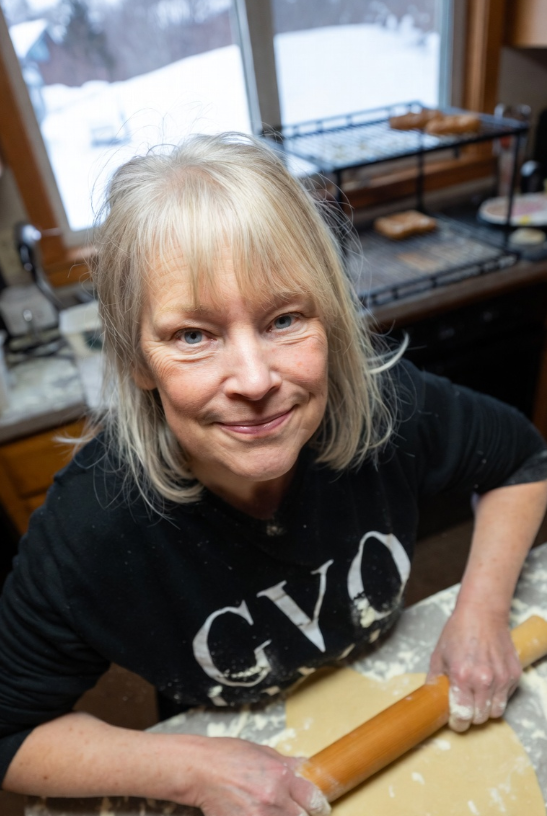
About the cook who shared this
Linda Johansson
Week 41 of Linda’s 30-year story
· Duluth, Minnesota
Linda is a sixty-three-year-old retired nurse from Duluth, Minnesota, living alone in the house where she raised her children and said goodbye to her husband. She lost Paul to ALS in 2020 after two years of watching the kindest man she'd ever known lose everything but his dignity. She cooks Scandinavian comfort food and Minnesota hotdish and the pot roast Paul loved, and she sets two places at the table out of habit because it makes her feel less alone. Every recipe she writes is a person she's loved.
