
 By
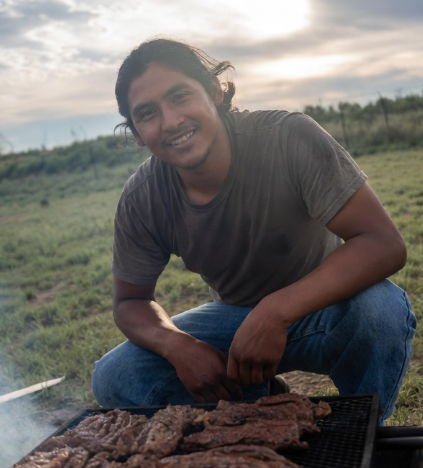
By February 2036. River was fifteen now—had turned fifteen in December—and the farming work he'd been doing on the demonstration beds was beginning to show results that could be measured and documented in the way Kai wanted to document it for publication. River had been keeping his own field notes since the beginning, which surprised me when Kai mentioned it—not the keeping of notes, which was River being River, but that he'd been keeping them systematically, in a format that could be analyzed. Kai said he'd been reviewing them and they were good data, carefully observed.
I asked River about the notes at Thursday dinner. He said he'd started keeping them because Kai had mentioned that documentation was the difference between practice and knowledge that could be transferred. He said he wanted to transfer what he was learning, not just do it. I said: that's exactly right. He said: I know. I got it from you. He said this without any particular emphasis, just as a statement of attribution. The way you credit a source.
Made him kanuchi that evening—the full preparation, three hours of pounding and simmering. He helped with the pounding, which he'd done a few times before, and his endurance was better at fifteen than mine had been at twenty. The broth came out exactly as it should: dark, rich, faintly bitter, complex in the way that long-cooked things from a single primary ingredient can be complex. River ate two bowls. I wrote it down. Third time making kanuchi with River. He's almost ready to lead it himself.
Kanuchi is its own thing—you can’t substitute it, and I wouldn’t try. But the evening we made it, after River had gone home and I was cleaning the kitchen, I kept thinking about that motion of pounding, the smell of toasted nuts filling the room, and I wanted to make something else that honored that same patience. Banana walnut bread isn’t kanuchi, but it’s built on the same principle: a few honest ingredients, time, and the willingness to let the process teach you something. I made a loaf the next morning and brought half of it to River at Thursday dinner the following week.
Banana Walnut Bread
Prep Time: 15 minutes | Cook Time: 60 minutes | Total Time: 1 hour 15 minutes | Servings: 10
Ingredients
- 3 large ripe bananas, mashed
- 1/3 cup unsalted butter, melted
- 3/4 cup granulated sugar
- 1 large egg, beaten
- 1 teaspoon vanilla extract
- 1 teaspoon baking soda
- 1/4 teaspoon salt
- 1 1/2 cups all-purpose flour
- 3/4 cup walnuts, roughly chopped
Instructions
- Preheat the oven. Set oven to 350°F. Grease a 9x5-inch loaf pan and line the bottom with parchment paper.
- Mash the bananas. In a large bowl, mash the bananas with a fork until mostly smooth with a few small chunks remaining.
- Combine wet ingredients. Stir the melted butter into the mashed bananas. Mix in the sugar, beaten egg, and vanilla extract until well combined.
- Add dry ingredients. Sprinkle the baking soda and salt over the mixture and stir. Add the flour and fold gently until just incorporated—do not overmix.
- Fold in the walnuts. Add the chopped walnuts and fold them through the batter evenly.
- Bake. Pour the batter into the prepared loaf pan. Bake for 55 to 60 minutes, until a toothpick inserted in the center comes out clean.
- Cool. Let the bread rest in the pan for 10 minutes, then turn it out onto a wire rack to cool completely before slicing.
Nutrition (per serving)
Calories: 245 | Protein: 4g | Fat: 10g | Carbs: 36g | Fiber: 2g | Sodium: 200mg