
 By
By October and the farmers market is transforming. The tomatoes are gone, replaced by mountains of winter squash — delicata, acorn, butternut, and my beloved kabocha. The apples have arrived, stacked in wooden crates, Honeycrisp and Fuji and Gravenstein. The last of the corn sits in shrinking piles. The market is negotiating the handoff between seasons, and I am here for every moment of it, Miya strapped to my chest, both of us breathing in the particular October smell of Portland: rain, fallen leaves, woodsmoke, apples.
I took Miya to the market this week for what felt like the first real outing — not a quick dash but a proper visit, slow and intentional, stopping at every stall, talking to the vendors, letting Miya reach for things. She grabbed an apple and tried to eat it. She is seven months old and does not yet have the teeth or coordination for an apple, but she tried, and her trying is the story of her life so far: reach for the thing. Miss the thing. Reach again.
I wrote a blog post about this market trip — about roasting kabocha with miso glaze, about the first time I took my daughter to the place where the food comes from, about wanting her to know that dinner does not start at the grocery store but in a field, on a vine, in someone's hands. The post felt important in a way my earlier posts did not. It felt like the beginning of something. The writing is getting more personal, more literary, more like the essays I always wanted to write but did not have the life experience to fuel. Now I have the life experience. Now I have a baby and a failing marriage and an anxiety disorder and a dead — no, a living grandmother in Sacramento whose recipes are my inheritance. Now I have material.
The kabocha with miso glaze: cut into wedges, brushed with a mixture of white miso, mirin, and sesame oil, roasted at high heat until caramelized and tender. It is sweet and savory and smoky and it tastes like fall concentrated into a single bite. I served it over rice with pickled cucumbers and miso soup and it was the kind of meal that makes you close your eyes after the first bite. This post — the one about the farmers market and the kabocha and the daughter on my chest — became one of my most-shared early pieces. The writing is starting to matter to me in a way yoga does not fill. The writing is becoming the thing.
Brian ate the kabocha without comment. He has stopped commenting on my cooking, which I choose to interpret as acceptance rather than indifference, though the line between the two is thin enough to be transparent.
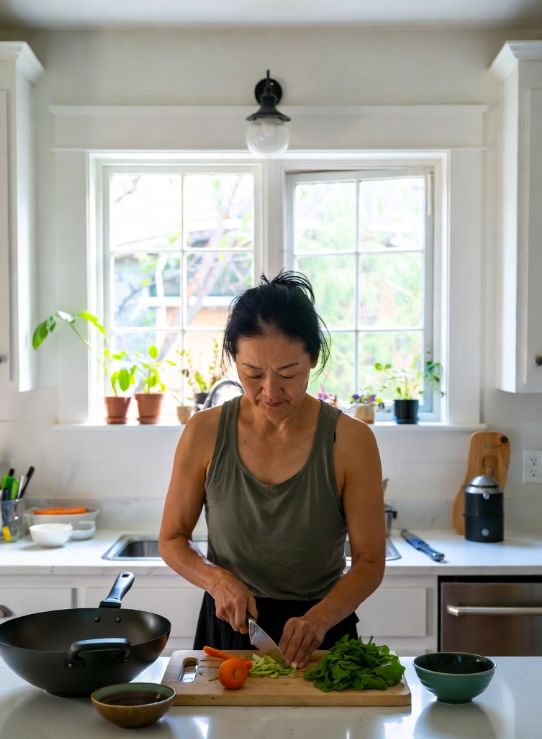
The kabocha taught me something that October: that a glaze — miso, mirin, a little sesame — is less a technique than a philosophy, a way of saying that the ingredient in front of you deserves attention and heat and something sweet and savory working together. On nights when I don’t have a farmers market haul or a full afternoon to roast squash, I reach for the same pantry and apply the same thinking to beef teriyaki with vegetables, quick and weeknight-honest, the kind of meal that fills the kitchen with the smell of caramelizing soy and makes even a quiet dinner feel deliberate. It is the same table, the same philosophy, just a different season on the plate.
Beef Teriyaki and Vegetables
Prep Time: 15 min | Cook Time: 15 min | Total Time: 30 min | Servings: 4
Ingredients
- 1 lb flank steak or sirloin, thinly sliced against the grain
- 2 cups broccoli florets
- 1 red bell pepper, thinly sliced
- 1 medium carrot, julienned
- 2 tablespoons neutral oil, divided
- 2 green onions, thinly sliced, for garnish
- 1 teaspoon sesame seeds, for garnish
- Steamed white rice, for serving
- For the teriyaki glaze:
- 1/4 cup soy sauce
- 2 tablespoons mirin
- 1 tablespoon sake or dry sherry
- 1 tablespoon brown sugar
- 1 teaspoon sesame oil
- 2 cloves garlic, minced
- 1 teaspoon fresh ginger, grated
- 1 teaspoon cornstarch
Instructions
- Make the glaze. Whisk together soy sauce, mirin, sake, brown sugar, sesame oil, garlic, ginger, and cornstarch in a small bowl until the sugar dissolves and cornstarch is fully incorporated. Set aside.
- Marinate the beef. Toss sliced beef with 2 tablespoons of the glaze in a bowl. Let sit at room temperature for 10–15 minutes while you prep the vegetables.
- Stir-fry the vegetables. Heat 1 tablespoon oil in a large skillet or wok over high heat until shimmering. Add broccoli, bell pepper, and carrot. Stir-fry 3–4 minutes until just tender-crisp with a little char. Transfer to a plate.
- Sear the beef. Add remaining tablespoon of oil to the skillet. Spread beef in a single layer — work in batches if needed — and cook undisturbed for 1–2 minutes until caramelized on the bottom. Flip and cook 1 minute more.
- Bring it together. Return vegetables to the pan. Pour remaining glaze over everything and toss to coat. Cook 1–2 minutes, stirring, until the sauce thickens and clings to the beef and vegetables.
- Serve. Spoon over steamed rice. Finish with sliced green onions and sesame seeds.
Nutrition (per serving)
Calories: 310 | Protein: 27g | Fat: 13g | Carbs: 19g | Fiber: 3g | Sodium: 810mg