November 10 was the anniversary of the Edmund Fitzgerald sinking. Forty-one years. Paul observes this date the way some people observe saints' days — with reverence, knowledge, and a sense of personal connection to events he did not experience. He wore a black tie to school. He lectured his students about the storm, the ship, the twenty-nine men who died. He came home and read Gordon Lightfoot's lyrics at the kitchen table, which he does every year, and I listened, which I do every year.
I've heard the song approximately four hundred times. I know every word. I find it beautiful and sad in the way that Duluth itself is beautiful and sad — a place where the water takes what it wants and the people who live near it know this and stay anyway.
Paul is sixty — he turned sixty in July, quietly, with a dinner at the Black Woods in Duluth and a card from each of the kids. He doesn't act sixty. He doesn't feel sixty, he says. But I see it — the way he puts his glasses on to read the newspaper now, the way he stretches before his morning walk, the slight pause at the top of the stairs. I notice because I'm a nurse and because I'm his wife and because both of those things mean I watch the people I love with the attention of someone who knows that the body is a temporary arrangement.
I also turned fifty-three this year, which I did not celebrate because there's nothing to celebrate about fifty-three — it's the unremarkable age between the milestone of fifty and the nothing of fifty-five. My body is fine. My knees ache after twelve-hour shifts. My hands are still steady, which matters more for a nurse than for most people. I can still knead bread dough for ten minutes without stopping, which I consider a better health indicator than whatever the doctor measures.
I made a comfort meal this week: ham and scalloped potatoes, which is not Swedish and not exciting but is the meal I make in mid-November when the darkness has settled in and the body wants warmth and carbohydrates and the slow, heavy satisfaction of potatoes baked in cream. You layer thin-sliced potatoes with ham and onion in a casserole dish, pour over a béchamel sauce with mustard and Gruyère, and bake it for an hour until the top is golden and the kitchen smells like a farmhouse in December.
Paul had two helpings. I had one and a half. Sven had the bit that stuck to the edge of the dish when I was serving, which I scraped off for him because I am a pushover and he knows it.
Snow forecast for this weekend. The first real snow — not the teasing flurries of October but the genuine, accumulating, we-live-in-Duluth-and-this-is-what-we-signed-up-for snow. Paul checked the snow blower. I checked the supply of rock salt. The Johansson household is prepared for winter the way a ship is prepared for a storm: methodically, without drama, and with the full understanding that it's coming regardless.
The ham and scalloped potatoes fed us well that Tuesday — Paul had his two helpings, Sven got the crispy edge, and that was that. But the spirit of that meal, the layering and the cream and the slow hour in the oven while the house went dark outside, is one I return to all winter. When I want that same unhurried warmth on a night when there’s nothing on the calendar but the wind off the lake, I build a vegetable lasagna the same way I build everything in November: methodically, without drama, and with the full understanding that the wait is part of the point.
Best Vegetable Lasagna
Prep Time: 30 min | Cook Time: 55 min | Total Time: 1 hr 25 min | Servings: 8
Ingredients
- 12 lasagna noodles, cooked al dente and drained
- 2 tablespoons olive oil
- 1 medium zucchini, diced
- 1 medium yellow squash, diced
- 1 red bell pepper, diced
- 8 oz cremini mushrooms, sliced
- 3 cloves garlic, minced
- 1 teaspoon dried Italian seasoning
- Salt and black pepper to taste
- 3 cups ricotta cheese
- 1 large egg
- 1/4 cup fresh flat-leaf parsley, chopped
- 3 cups marinara sauce (jarred or homemade)
- 3 cups shredded mozzarella cheese, divided
- 1/2 cup grated Parmesan cheese, divided
- For the béchamel: 3 tablespoons unsalted butter, 3 tablespoons all-purpose flour, 2 cups whole milk, pinch of nutmeg, salt to taste
Instructions
- Roast the vegetables. Preheat oven to 400°F. Heat olive oil in a large skillet over medium-high heat. Add zucchini, squash, bell pepper, and mushrooms. Cook, stirring occasionally, for 8—10 minutes until softened and any liquid has evaporated. Add garlic and Italian seasoning, cook one minute more. Season with salt and pepper and set aside.
- Make the ricotta mixture. In a medium bowl, combine ricotta, egg, parsley, 1/4 teaspoon salt, and a few grinds of black pepper. Stir until smooth and set aside.
- Make the béchamel. In a small saucepan, melt butter over medium heat. Whisk in flour and cook for 1 minute. Gradually whisk in milk, a little at a time, until smooth. Cook, stirring constantly, for 4—5 minutes until thickened. Add nutmeg and salt to taste. Remove from heat.
- Reduce oven to 375°F. Lightly grease a 9x13-inch baking dish. Spread 1/2 cup marinara across the bottom.
- Layer the lasagna. Lay 3 noodles over the sauce. Spread half the ricotta mixture, half the roasted vegetables, 1/2 cup marinara, and 3/4 cup mozzarella. Repeat the layer. Add a third layer of noodles, then pour the béchamel evenly over the top. Finish with remaining marinara, remaining mozzarella, and all the Parmesan.
- Bake covered. Cover tightly with foil and bake at 375°F for 35 minutes.
- Bake uncovered. Remove foil and bake an additional 20 minutes until the top is golden and bubbling at the edges. Let rest 15 minutes before cutting — this matters; the layers will hold.
Nutrition (per serving)
Calories: 480 | Protein: 26g | Fat: 22g | Carbs: 44g | Fiber: 4g | Sodium: 720mg
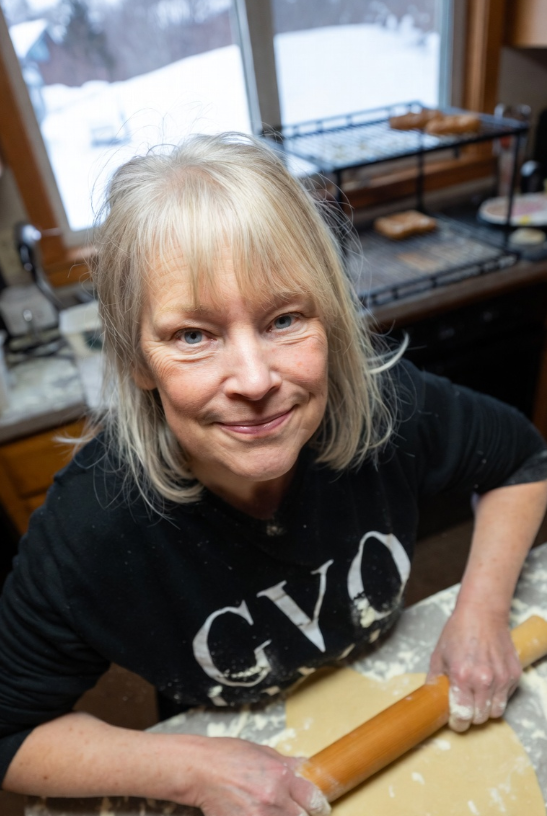
About the cook who shared this
Linda Johansson
Week 34 of Linda’s 30-year story
· Duluth, Minnesota
Linda is a sixty-three-year-old retired nurse from Duluth, Minnesota, living alone in the house where she raised her children and said goodbye to her husband. She lost Paul to ALS in 2020 after two years of watching the kindest man she'd ever known lose everything but his dignity. She cooks Scandinavian comfort food and Minnesota hotdish and the pot roast Paul loved, and she sets two places at the table out of habit because it makes her feel less alone. Every recipe she writes is a person she's loved.
