
 By
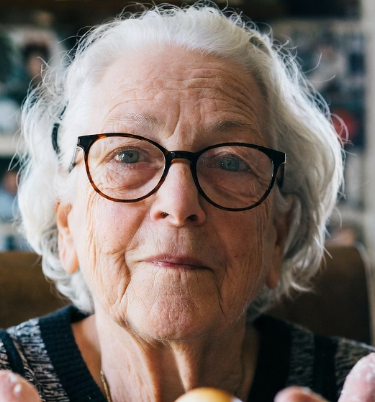
By The last week. The final week of forty-three years of teaching English at Oceanside High School. I have been counting the lasts for months, and now the lasts are arriving all at once: the last Monday, the last homeroom, the last attendance sheet, the last essay graded, the last time I write on the chalkboard, the last time I erase the chalkboard, the last time I stand at the front of a room and say, "Open your books to page..."
The retirement ceremony was Friday. The school held an assembly. The gym was full — students, faculty, staff, former students who came back. Three of my former students who are now published authors were there, including the Pulitzer finalist, who flew in from Portland and who stood at the podium and said, "Ruth Feldman taught me to read. Not the mechanics — I could decode words before I got to her classroom. She taught me to read the way a musician reads music: for what's between the notes. For the silences. For the part the writer left out." I did not cry during this speech. I cried during every other speech. But this one I held, I held it in my chest and my throat and my clenched hands, because the Pulitzer finalist was talking about what I actually do, what I have always done, what I will always do even after I stop doing it professionally: I teach people to read the silences.
I gave a short speech. I thanked the students — not specific students, all of them, forty-three years of them, the thousands of teenagers who sat in my classroom and read books they didn't want to read and discovered, sometimes, that the books were better than they expected, and the discovering was the teaching, and the teaching was the life. I said, "I taught English for forty-three years. I learned more than I taught. Thank you for being my teachers." Then I sat down. Then I went home. Then I sat in my kitchen and put my head on the table and cried for a very long time, and Marvin came in and sat beside me and put his hand on my back, and the hand was steady and warm and the gesture was pure Marvin, the instinctive reaching toward a person in pain, and the disease has taken so much but it has not taken that — the reaching, the hand, the comfort without words. He sat with me. I cried. The kitchen held us both.
The next morning, I did not know what to do with my hands. Marvin was still asleep and the kitchen was quiet in a way it has never been on a school-day morning, and I stood at the counter for a long time before I understood: I needed to bake something. Not for a classroom, not for a faculty potluck — just for the two of us, just for the day, just because the ceremony deserved a ceremony of its own. I made this cranberry orange cake because it is tart and bright and a little complicated, and it holds together anyway, and that felt exactly right.
Cranberry Orange Cake
Prep Time: 25 min | Cook Time: 35 min | Total Time: 1 hr | Servings: 12
Ingredients
- 2 1/2 cups all-purpose flour
- 2 teaspoons baking powder
- 1/2 teaspoon baking soda
- 1/2 teaspoon salt
- 3/4 cup unsalted butter, softened
- 1 1/2 cups granulated sugar
- 3 large eggs, room temperature
- 1 tablespoon fresh orange zest (from about 2 oranges)
- 1/2 cup fresh orange juice
- 1/2 cup sour cream
- 1 1/2 cups fresh or frozen cranberries, halved
- 1 tablespoon flour (for tossing cranberries)
- For the orange glaze:
- 1 1/2 cups powdered sugar, sifted
- 3 tablespoons fresh orange juice
- 1 teaspoon orange zest
Instructions
- Preheat and prepare. Preheat oven to 350°F. Grease and flour two 9-inch round cake pans, or one 9x13-inch baking pan. Line the bottoms with parchment paper.
- Mix dry ingredients. In a medium bowl, whisk together the 2 1/2 cups flour, baking powder, baking soda, and salt. Set aside.
- Cream butter and sugar. In a large bowl, beat the softened butter and granulated sugar together on medium-high speed for 3–4 minutes until pale and fluffy. Scrape down the sides as needed.
- Add eggs and citrus. Beat in eggs one at a time, mixing well after each addition. Mix in the orange zest.
- Alternate wet and dry. Reduce mixer to low. Add the flour mixture in three additions, alternating with the orange juice and sour cream (beginning and ending with flour), mixing just until combined after each addition. Do not overmix.
- Fold in cranberries. Toss the halved cranberries with the 1 tablespoon of flour, then gently fold them into the batter with a rubber spatula.
- Bake. Divide the batter evenly between the prepared pans. Bake for 30–35 minutes, until a toothpick inserted in the center comes out clean and the tops are lightly golden. Allow cakes to cool in the pans for 10 minutes, then turn out onto a wire rack to cool completely.
- Make the glaze. Whisk together the powdered sugar, orange juice, and orange zest until smooth. The glaze should be thick but pourable; add orange juice a teaspoon at a time to adjust consistency.
- Glaze and serve. Once the cake is completely cool, drizzle the glaze evenly over the top, letting it run naturally down the sides. Let the glaze set for 10 minutes before slicing.
Nutrition (per serving)
Calories: 380 | Protein: 5g | Fat: 14g | Carbs: 60g | Fiber: 1g | Sodium: 210mg