I made scrambled eggs this week. Hold your applause.
Okay but actually, I watched this YouTube video of some British chef making scrambled eggs and it looked way different than what I thought scrambled eggs were. He was using butter — like, a lot of butter — and cooking them low and slow and taking them off the heat and putting them back on, and the result looked creamy and soft instead of the rubbery yellow pucks I've been making since college. So I tried it.
The first attempt was bad. Still rubbery. I used too high of a heat because patience is not my strong suit. The second attempt, the next morning, was better. The third attempt, on Saturday morning, was actually good. Creamy, a little runny, seasoned with just salt and pepper and chives I bought at the Pick 'n Save because the video said to. I ate them on toast and felt like I'd accomplished something meaningful, which is objectively ridiculous but subjectively true.
Here's what I'm figuring out: cooking is a lot like brewing. Temperature matters. Timing matters. You have to pay attention and not just throw stuff in a pan and hope for the best. I've been the "hope for the best" guy my entire life, in cooking and in general. But the brewery is teaching me that precision and patience produce better results. Maybe that applies to everything.
Work was solid this week. We're prepping for a summer seasonal — a fruit wheat beer with Door County cherries. Marcus let me weigh the cherry addition, which sounds trivial but the balance between fruit and beer is delicate and getting the amount right matters. I added the cherries and Marcus tasted the sample and nodded, which is the highest form of Marcus praise.
Thursday hockey was brutal. My legs are still not used to skating again and some of the guys in this league are way better than me. I took a hit into the boards from a guy named Gary who's probably fifty years old and built like a Buick. I'm sore but happy. Hockey makes me feel alive in a way nothing else does. It's the speed, the contact, the cold. It's the closest I get to feeling like I'm seventeen again, back when things were simpler, back when Danny was in the stands.
Sunday dinner: Babcia made a cold cucumber soup — chłodnik — because it was warm out. It's a summer thing, bright pink from beets, served cold with hard-boiled eggs. Dad hates it and eats it anyway because you don't refuse Babcia's food. Ever.
After three mornings of scrambled egg experiments — all in the name of finally getting that low-and-slow, butter-rich creaminess right — it felt only natural to take that same hard-won patience and apply it to something that demands exactly the same respect for heat: carbonara. The whole lesson of the week was that eggs punish impatience, and carbonara is just scrambled eggs’ more dramatic Italian cousin. Babcia’s chódnik reminded me that some of the best food is deceptively simple, and this one is too — just eggs, pasta, and the nerve to keep the heat low.
Creamy Pasta Carbonara
Prep Time: 10 minutes | Cook Time: 20 minutes | Total Time: 30 minutes | Servings: 4
Ingredients
- 12 oz spaghetti or rigatoni
- 6 oz pancetta or thick-cut bacon, diced
- 3 large eggs
- 2 large egg yolks
- 1 cup freshly grated Pecorino Romano or Parmesan, plus more for serving
- 4 cloves garlic, minced
- 1/2 tsp freshly cracked black pepper, plus more to taste
- 1/4 tsp kosher salt, plus more for pasta water
- 1/2 cup reserved pasta cooking water
- Fresh parsley, chopped, for garnish (optional)
Instructions
- Salt and boil the pasta. Bring a large pot of heavily salted water to a boil. Cook pasta according to package directions until al dente. Before draining, reserve at least 1/2 cup of the starchy cooking water. Drain and set aside.
- Cook the pancetta. While the pasta cooks, add the diced pancetta to a large skillet over medium heat. Cook, stirring occasionally, until the fat is rendered and the pancetta is lightly crisp, about 6–8 minutes. Add the minced garlic and cook 1 minute more. Remove pan from heat and let it cool slightly — this step matters.
- Whisk the egg mixture. In a medium bowl, whisk together the whole eggs, egg yolks, and grated cheese until smooth. Season with the black pepper and a small pinch of salt. Set near the stove.
- Temper and combine — low and slow. Add the drained pasta to the skillet with the pancetta off the heat. Immediately pour the egg-cheese mixture over the pasta while tossing constantly with tongs. Add pasta water a splash at a time, tossing and folding, until the sauce is silky and creamy and clings to every strand. The residual heat from the pasta and pan does the work — do not put the pan back over direct flame or the eggs will scramble.
- Adjust and serve. Taste and adjust salt and pepper. Plate immediately, top with extra grated cheese, cracked black pepper, and parsley if using. Eat right away — carbonara waits for no one.
Nutrition (per serving)
Calories: 620 | Protein: 28g | Fat: 24g | Carbs: 72g | Fiber: 3g | Sodium: 780mg
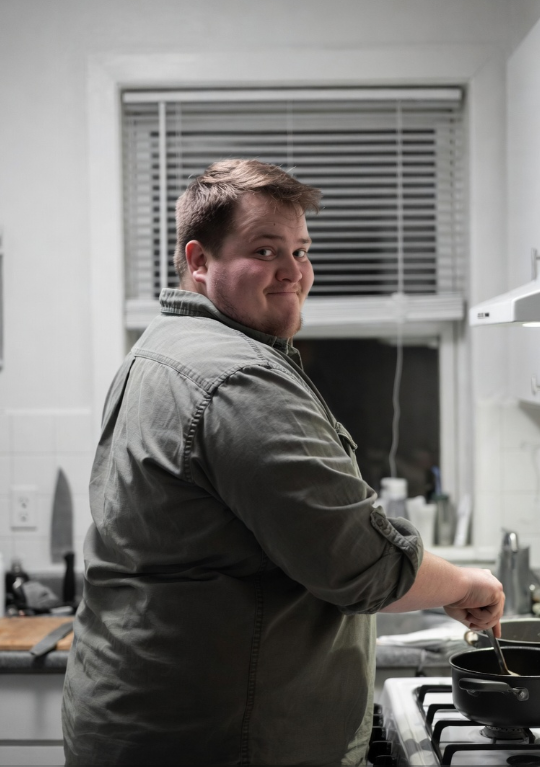
About the cook who shared this
Jake Kowalski
Week 8 of Jake’s 30-year story
· Milwaukee, Wisconsin
Jake is a twenty-nine-year-old brewery worker, newlywed, and proud Polish-American from Milwaukee's Bay View neighborhood. He didn't start cooking until his grandmother Babcia Helen passed away and left behind a stack of grease-stained recipe cards. Now he makes pierogi from scratch, smokes meats on a balcony smoker his landlord pretends not to notice, and writes for guys who want to cook good food but don't know a roux from a rub.
