January 15. The appointment. The last appointment. The one that turns "strongly indicated" into "confirmed."
I drove. Paul sat beside me. We didn't talk for the first hour. The highway was white — January in Minnesota, the world reduced to two colors: white ground, gray sky. The car heater ran. MPR played. Neither of us listened.
At mile fifty, Paul said, "Whatever she says, we handle it together." I said, "Yes." He said, "I need you to be my wife today, not my nurse." I said, "I'm always both." He said, "Today, wife first." I said, "Okay."
Dr. Andersen was waiting. The tests took two hours. More EMG. More nerve conduction. More reflex testing. More questions. I sat in the waiting room and I didn't read a magazine this time. I just sat. I watched people come and go. I watched the clock. I thought about the ice on the lake and the meatballs in the freezer and the advent star that I still haven't taken down because I need light in the window.
Paul came out. We went into her office. She had the results. She said the words: amyotrophic lateral sclerosis. ALS. Lou Gehrig's disease. She said it gently. She said it clearly. She said it the way doctors are trained to say the worst thing — with facts attached, with treatment options, with the word "team" used multiple times because the word "team" suggests you're not alone even when the diagnosis says you are.
I heard everything. The nurse in me heard every word — the prognosis, the progression, the timeline, the medications, the referrals. The nurse catalogued and organized and filed.
The wife heard nothing except the sound of the world ending, which sounds like a Tuesday afternoon in a neurologist's office in Minneapolis with fluorescent lights and bad carpet and your husband's hand — the hand you've held for thirty years — sitting useless in his lap.
We drove home. Paul said, "Well, this is going to be hard." The same words he said in December. The same understatement. The same Paul.
I said, "Yes. It is."
We drove for three hours and forty minutes without speaking again. When we got home, I parked in the driveway and we sat in the car for five minutes, the engine off, the cold creeping in, and then Paul said, "I'm hungry." And I laughed. I laughed because my husband was just diagnosed with ALS and he's hungry, and the absurdity of it — the human, stubborn, beautiful absurdity of hunger in the face of catastrophe — broke something in me that needed breaking.
I went inside and I made him dinner. Mamma's meatballs — my version, with cream gravy and lingonberry jam and boiled potatoes. The meal I've made a thousand times. The meal I'll make a thousand more. I set two places. I lit the candles. I served the food.
Paul ate. He said, "Good meatballs, Linda."
I said, "Thank you, Paul."
The advent star is still in the window. I'm leaving it there.
I have made versions of this recipe on the hardest nights of my life — and the truth is, that’s exactly why I keep making it. There’s something about the way you work ricotta into flour with your hands, gently, without forcing it, that asks just enough of you to keep you present without demanding more than you have. The night Paul and I came home from Minneapolis, I needed something that would hold — something soft and warm that didn’t require me to think too hard or feel too much, just enough to set two places and light the candles. These gnudi are that recipe for me: simple, forgiving, and quietly nourishing in the way that only handmade food can be.
Foolproof Ricotta Gnocchi (Gnudi)
Prep Time: 20 min | Cook Time: 10 min | Total Time: 30 min | Servings: 4
Ingredients
- 2 cups (16 oz) whole-milk ricotta, well-drained
- 1 large egg
- 1 large egg yolk
- 3/4 cup finely grated Parmesan, plus more for serving
- 3/4 cup all-purpose flour, plus more for dusting
- 1/2 teaspoon fine sea salt
- 1/4 teaspoon freshly ground black pepper
- 1/8 teaspoon freshly grated nutmeg
- 4 tablespoons unsalted butter
- 4–5 fresh sage leaves (optional)
- Flaky sea salt, for finishing
Instructions
- Drain the ricotta. Spoon ricotta onto a few layers of paper towel or a clean kitchen towel and press gently to remove excess moisture. Let it sit for at least 10 minutes. The drier the ricotta, the more tender your gnudi will be.
- Mix the dough. In a large bowl, combine the drained ricotta, egg, egg yolk, Parmesan, salt, pepper, and nutmeg. Stir gently until just combined. Add the flour and fold in with a spatula until a soft, slightly sticky dough forms. Do not overwork it.
- Shape the gnudi. Dust your hands and a clean surface generously with flour. Scoop tablespoon-sized portions of dough and roll gently between your palms into soft ovals or rounds. Set them on a lightly floured baking sheet as you go. The dough will be tender — that is correct.
- Boil the gnudi. Bring a large pot of well-salted water to a gentle boil. Working in batches, drop in 8–10 gnudi at a time. Cook until they float and then continue cooking for 1 additional minute, about 3–4 minutes total. Remove with a slotted spoon and set aside.
- Make the brown butter. In a wide skillet over medium heat, melt the butter. If using sage, add the leaves now and let them crisp for 30 seconds. Continue cooking, swirling the pan, until the butter turns golden and smells nutty, about 2–3 minutes. Do not walk away.
- Finish and serve. Add the cooked gnudi to the skillet and toss gently to coat in the brown butter. Transfer to warm plates, spoon any remaining butter from the pan over the top, and finish with a shower of grated Parmesan and a pinch of flaky salt. Serve immediately.
Nutrition (per serving)
Calories: 390 | Protein: 18g | Fat: 22g | Carbs: 28g | Fiber: 1g | Sodium: 520mg
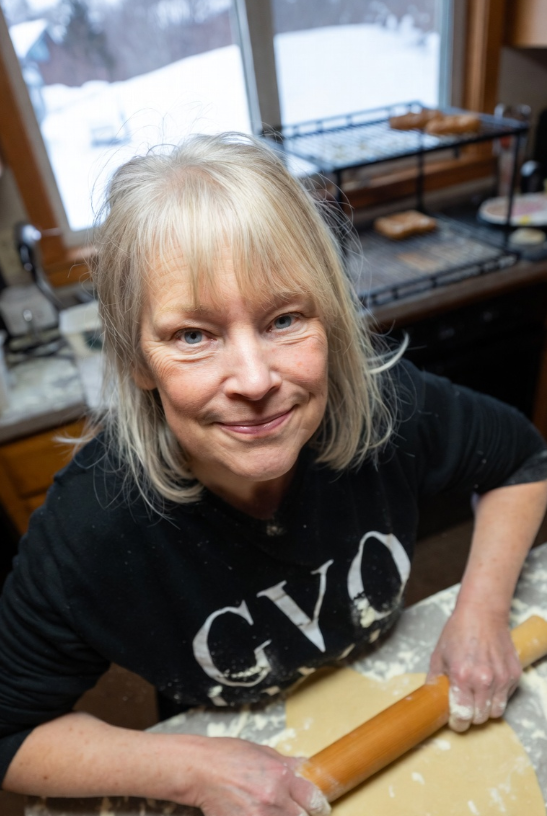
About the cook who shared this
Linda Johansson
Week 95 of Linda’s 30-year story
· Duluth, Minnesota
Linda is a sixty-three-year-old retired nurse from Duluth, Minnesota, living alone in the house where she raised her children and said goodbye to her husband. She lost Paul to ALS in 2020 after two years of watching the kindest man she'd ever known lose everything but his dignity. She cooks Scandinavian comfort food and Minnesota hotdish and the pot roast Paul loved, and she sets two places at the table out of habit because it makes her feel less alone. Every recipe she writes is a person she's loved.
