
 By
By Fourth of July week. Second pandemic Fourth. No family gathering, no Roger and Marlene driving down from Grinnell, no strawberry shortcake with Roger's berries, no Noah playing saxophone on the deck while the grill smoked and the garden glowed. Just us. The five of us. The pandemic unit. The people who have been in this house together for four months and are either bonded or fused and the difference is academic.
I made the full spread anyway — pork tenderloin sandwiches, potato salad, baked beans, corn on the cob from the farmers' market (our garden corn isn't ready yet). The food was the same. The table was smaller. The absence was louder than any firework. Roger and Marlene weren't here and the Fourth of July without Roger critiquing the grill temperature and Marlene bringing rolls nobody asked for is a Fourth of July with a hole in it, a holiday with a missing piece, and the food fills the plates but not the chairs.
Jack's watermelon is growing. No Marcus competition this year — Marcus's family moved during the pandemic, relocated to Minneapolis, and Jack lost his agricultural rival and his best friend in the same announcement. He didn't cry. He checked the watermelon. He said, "I'll grow a good one for both of us." The grief of a nine-year-old, expressed in watermelon. The promise to grow well on behalf of the absent. The Weber way of mourning: you don't stop growing because someone left. You grow harder.
Kevin grilled bratwursts. Noah played saxophone — "America the Beautiful," slowly, the notes hanging in the humid air like something you could almost see. Emma organized the dessert table. Jack measured the watermelon: five-point-three inches. No competition. No rival measurement. Just Jack and his melon and the quiet discipline of growing something alone. I watched him from the kitchen window and I thought about Roger growing sunflowers for Marlene and Marlene canning sixteen jars alone and the Weber tradition of doing the work whether anyone is watching or not, because the work is the point and the watching is optional and the growing is what matters.
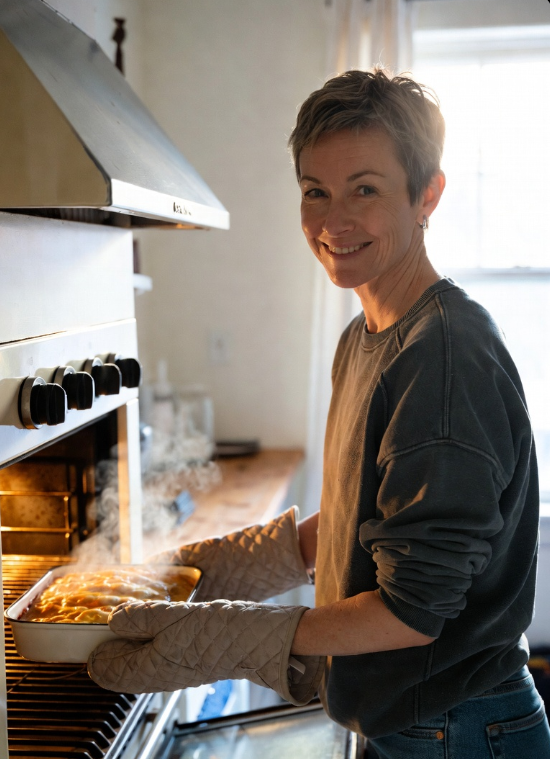
The pork tenderloin sandwiches I made that Fourth were a tradition I wasn’t willing to let the pandemic take from us — and this Fruit-Pecan Pork Roast is the version I’ve come back to every summer since, because the sweetness of the fruit against the savory pork feels exactly like that holiday does: warm and full and a little bittersweet all at once. It’s the kind of roast that fills a kitchen with something that smells like effort and care, which is the closest I know how to get to filling an empty chair. Make it for a crowd, or make it for five people who are either bonded or fused — it holds up either way.
Fruit-Pecan Pork Roast
Prep Time: 20 min | Cook Time: 1 hr 15 min | Total Time: 1 hr 35 min | Servings: 8
Ingredients
- 1 boneless pork loin roast (3 to 3-1/2 lbs)
- 1/2 teaspoon salt
- 1/4 teaspoon black pepper
- 1 tablespoon olive oil
- 1/2 cup chopped dried apricots
- 1/2 cup dried cranberries
- 1/2 cup chopped pecans, toasted
- 3 tablespoons brown sugar, packed
- 1 teaspoon ground cinnamon
- 1/4 teaspoon ground nutmeg
- 2 tablespoons Dijon mustard
- 1/2 cup apple cider or apple juice
- 2 tablespoons butter
Instructions
- Preheat and season. Preheat oven to 350°F. Pat the pork roast dry and season all over with salt and pepper.
- Sear the roast. Heat olive oil in a large oven-safe skillet or Dutch oven over medium-high heat. Sear the pork on all sides until golden brown, about 3–4 minutes per side. Remove pork and set aside.
- Make the fruit-pecan topping. In a small bowl, combine the dried apricots, cranberries, pecans, brown sugar, cinnamon, and nutmeg. Stir to mix.
- Coat the roast. Brush the top and sides of the pork roast with Dijon mustard, then press the fruit-pecan mixture firmly onto the mustard-coated surface.
- Roast with liquid. Return the pork to the skillet. Pour the apple cider around (not over) the roast to keep the topping intact. Dot the top with butter.
- Roast to temperature. Transfer skillet to the oven and roast uncovered for 60–75 minutes, or until an instant-read thermometer inserted in the thickest part reads 145°F.
- Rest before slicing. Remove from oven and tent loosely with foil. Let rest 10 minutes before slicing to allow juices to redistribute. Spoon pan drippings over slices to serve.
Nutrition (per serving)
Calories: 380 | Protein: 34g | Fat: 18g | Carbs: 22g | Fiber: 2g | Sodium: 280mg