
 By
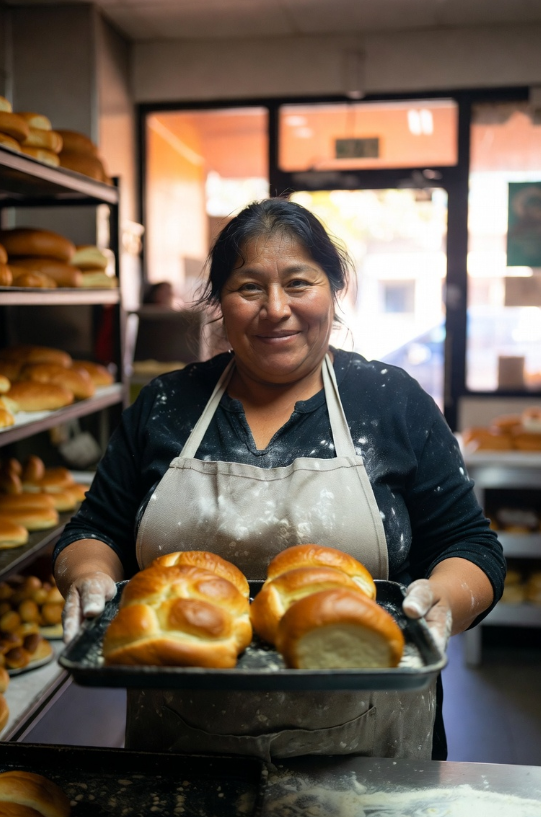
By Camila's first full week of kindergarten, and the reports from Mrs. Rodriguez are already coming in. Note one: "Camila has a wonderful singing voice and enjoys sharing it with the class. We are working on singing at appropriate times." Note two: "Camila is a natural leader. She has organized the reading corner into a performance space." Note three: "Camila told the other children that her mother owns a bakery and offered to bring conchas for everyone. Please let us know if this is possible." I sent thirty conchas on Friday. Mrs. Rodriguez said the children loved them. Camila said, "I told them they were the best," which is not humility but is accurate.
Luis Jr. has started his college and military applications. He is applying to UTEP as a backup — "just in case," he says, though I suspect he means "just in case I change my mind," which is a caveat I cling to like a life preserver because changing his mind is the outcome I secretly pray for even though I will support the outcome he actually chooses. He is also meeting with the Army recruiter monthly. The recruiter's name is Sergeant Vega. Luis Jr. talks about Sergeant Vega with the admiration of a boy who has found an older male figure who is not his father and not his grandfather and who represents a world he wants to enter. I don't resent Sergeant Vega. I am terrified of what Sergeant Vega represents. But I don't resent him. He is a door, and my son wants to walk through it, and my job is not to block the door but to make sure there is food on the other side.
The bakery is entering its fall rhythm — the transition from summer's aguas frescas and ceviche to autumn's champurrado and tamales. I love this transition. I love the way the menu changes with the season, the way the bakery breathes with the weather, cooling as the city cools, warming as the mornings get cold. The bakery is alive. Not metaphorically — literally. It has seasons. It has rhythms. It breathes in flour and breathes out bread and the cycle is the life.
I made pozole verde this week — the green version, with tomatillos and green chiles and pumpkin seeds, a variation on Rosa's red pozole that I invented myself. Rosa would have been suspicious. Green pozole is a Guerrero thing, not a Chihuahua thing, and Rosa was deeply suspicious of any recipe that originated south of Zacatecas. But I make it because the tomatillos are ripe and the green chiles are at the farm stand and the pozole is good — really good, herbal and bright in a way that the red version isn't — and I think Rosa would have tried it. Complained about it. Asked for more.
Alejandro sent a photograph again. Mailed, from Juárez, in a manila envelope with no note. This one was of the bakery in Anapra — no, not a bakery. The building where I dream the bakery will be. A corner building, concrete, with a metal door and a flat roof, four blocks from where our house used to be. Alejandro had taken a picture of it with a disposable camera and mailed it. No note. But the message was clear: I see your dream. I took a picture of it. It exists. And I put the photograph in the bakery, next to Rosa's picture and my naturalization certificate, and the wall is telling a story now — the past, the present, and the future, all on one wall, in photographs and frames and the flour dust that settles on everything.
The pozole verde I made this week reminded me that green food carries a different kind of energy than red — brighter, more alive, the flavor of something still growing. When I wanted to bring that same spirit to a quick weeknight pan I could get on the table between closing the bakery and helping Luis Jr. review his applications, I reached for spinach and white beans and feta, which together do something similar: they make a bowl that is herbal and honest and deeply satisfying, the kind of food that holds you without weighing you down. Alejandro’s photograph is still on my wall. The green on this plate felt like the right answer to it.
Greek Spinach with White Beans and Feta
Prep Time: 10 minutes | Cook Time: 20 minutes | Total Time: 30 minutes | Servings: 4
Ingredients
- 2 tablespoons olive oil
- 1 medium yellow onion, diced
- 4 cloves garlic, minced
- 1 (15 oz) can cannellini (white) beans, drained and rinsed
- 1 (14.5 oz) can diced tomatoes, with juices
- 1 teaspoon dried oregano
- 1/2 teaspoon crushed red pepper flakes
- 10 oz fresh baby spinach
- Juice of 1 lemon
- Salt and black pepper to taste
- 4 oz feta cheese, crumbled
- Fresh flat-leaf parsley, roughly chopped, for serving
Instructions
- Build the base. Heat olive oil in a large, wide skillet over medium heat. Add the diced onion and cook, stirring occasionally, until softened and translucent, about 5 to 6 minutes. Add the garlic and cook 1 minute more, until fragrant.
- Add beans and tomatoes. Stir in the cannellini beans, diced tomatoes with their juices, oregano, and red pepper flakes. Bring to a gentle simmer and cook for 5 to 7 minutes, allowing the flavors to come together and the liquid to reduce slightly.
- Wilt the spinach. Add the spinach in two or three batches, stirring and folding it into the pan between additions. Cook until all the spinach is fully wilted and incorporated, about 3 to 4 minutes total.
- Finish with lemon. Squeeze the lemon juice over the pan and season generously with salt and black pepper. Taste and adjust — the beans are mild and the feta will add salt, so season accordingly.
- Serve. Ladle into shallow bowls or onto plates. Top each portion with a generous handful of crumbled feta and a scattering of fresh parsley. Serve with crusty bread or warm pita to catch the broth.
Nutrition (per serving)
Calories: 290 | Protein: 14g | Fat: 13g | Carbs: 29g | Fiber: 8g | Sodium: 610mg