First real snow. Not a dusting, not a flurry — ten inches on Monday, the kind of snow that means business. The city went white in eight hours, and by Tuesday morning the world looked like a different planet, quiet and padded and transformed.
Paul snow-blowed the driveway at six AM. I shoveled the walkway. Sven went outside, sank to his chest in snow, looked at me with an expression of profound confusion and mild outrage, and went back inside. He'll adjust. He does this every year — the first snow offends him, the second snow confuses him, and by the third snow he's leaping through it like a puppy. Golden retrievers have short emotional memories.
The hospital was busy — snow means falls, and falls mean broken hips and wrists and the particular injuries that winter inflicts on bodies that aren't as young as they used to be. I worked three shifts this week and each one was full. I've been a nurse long enough to know that the first major snowfall is as predictable as a holiday — different patients, same injuries, same worried families, same fluorescent-lit hallways.
Mamma called to tell me she'd shoveled her own walkway. She's eighty-five. She shoveled her own walkway. I called Erik and said, "You need to shovel Mamma's walkway before she does it herself." Erik said, "I was there at seven." I said, "She was out at six." He said a word I won't repeat. We agreed to coordinate better. Mamma agreed to nothing because she wasn't consulted and wouldn't have listened if she had been.
I made a big pot of yellow split pea soup — ärtsoppa — on Tuesday, because that's what you eat after the first snowfall. It's the law. Swedish law, Johansson law, the law of anyone who has ever looked at a snowstorm through a kitchen window and thought: soup. I made a double batch: one for us, one for Mamma, one for the thermos Erik takes to his woodworking shop.
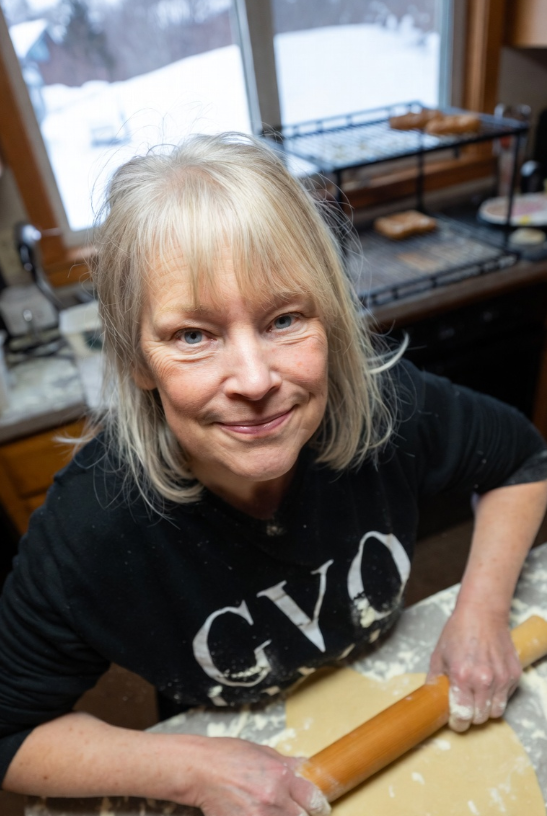
I also made lussebullar — saffron buns — because Advent starts on Sunday and the baking season is officially open. Lussebullar are traditional for St. Lucia Day in December, but I start making them now because the dough is beautiful — golden yellow from the saffron, enriched with butter, shaped into the traditional S-curve — and because the house needs to smell like saffron in winter the way it needs to smell like blueberries in summer. It's seasonal medicine.
The buns came out perfectly — golden, fragrant, with raisins studded in the curves. Paul ate two with his afternoon coffee and said, "Is it Christmas already?" I said, "Advent." He said, "Close enough." This from a man who teaches precision in history but applies none of it to the liturgical calendar.
December is coming. The snow is here. The baking has begun. We lean into the darkness because the alternative is to resist it, and Duluthians learned centuries ago that you don't resist winter. You make peace with it. You make soup. You bake. You light candles. You endure.
The soup came the same week as the lussebullar — because if you’re already leaning into the darkness, you might as well do it completely. Ham potato soup is Duluth winter in a bowl: thick, unhurried, the kind of thing that fills the kitchen with a different warmth than baking does — quieter, steadier, more like an exhale than a celebration. Paul had asked for it after the first real snowfall, and I’d been putting it off until the season felt earned. It felt earned now. Here’s how I make it.
Ham Potato Soup
Prep Time: 15 min | Cook Time: 40 min | Total Time: 55 min | Servings: 8
Ingredients
- 2 tablespoons unsalted butter
- 1 large yellow onion, diced
- 3 cloves garlic, minced
- 3 stalks celery, sliced
- 3 medium carrots, peeled and sliced into rounds
- 2 lbs Yukon Gold potatoes, peeled and cut into 3/4-inch cubes
- 2 cups diced cooked ham (about 10 oz)
- 6 cups low-sodium chicken broth
- 1 teaspoon dried thyme
- 1/2 teaspoon smoked paprika
- 1/2 teaspoon black pepper
- 1/2 teaspoon kosher salt, plus more to taste
- 3 tablespoons all-purpose flour
- 1 1/2 cups whole milk
- 1/2 cup sour cream
- 2 tablespoons chopped fresh parsley, for serving
Instructions
- Sauté the aromatics. Melt butter in a large heavy-bottomed pot or Dutch oven over medium heat. Add onion and celery and cook, stirring occasionally, until softened, about 6 minutes. Add garlic and cook 1 minute more until fragrant.
- Build the base. Add the carrots, potatoes, ham, chicken broth, thyme, smoked paprika, salt, and pepper. Stir to combine. Bring to a boil over medium-high heat, then reduce heat to medium-low. Cover and simmer until potatoes are just tender, about 18–20 minutes.
- Make a slurry. In a small bowl or measuring cup, whisk together the flour and milk until completely smooth with no lumps.
- Thicken the soup. Pour the milk slurry into the pot while stirring. Increase heat to medium and cook uncovered, stirring frequently, until the soup thickens noticeably, about 8–10 minutes.
- Finish with sour cream. Remove the pot from heat. Stir in the sour cream until fully incorporated. Taste and adjust salt and pepper as needed.
- Serve. Ladle into bowls and top with fresh parsley. Pairs well with crusty bread or, if you’ve been baking, a saffron bun still warm from the oven.
Nutrition (per serving)
Calories: 280 | Protein: 16g | Fat: 10g | Carbs: 32g | Fiber: 3g | Sodium: 680mg
About the cook who shared this
Linda Johansson
Week 36 of Linda’s 30-year story
· Duluth, Minnesota
Linda is a sixty-three-year-old retired nurse from Duluth, Minnesota, living alone in the house where she raised her children and said goodbye to her husband. She lost Paul to ALS in 2020 after two years of watching the kindest man she'd ever known lose everything but his dignity. She cooks Scandinavian comfort food and Minnesota hotdish and the pot roast Paul loved, and she sets two places at the table out of habit because it makes her feel less alone. Every recipe she writes is a person she's loved.
