The Damiano Center on Thursday: wild rice soup, fifty gallons, the same recipe I have been making for twenty-some years now. The constancy is the point. People come into the basement of that building hungry and uncertain and what they find is a fifty-gallon pot of wild rice soup that has been there every Thursday of every year, and they find Linda Johansson, who has been there too, and the constancy is the message: you can come back. You can come back. You can come back.
Lena (Anna's youngest, college freshman) is in college now. She calls me sometimes. The calls are about boys, mostly. I listen. I do not give advice. I am eighteen-year-old's grandmother. My credibility on boys is suspect at best. I tell her the kinds of things a grandmother is supposed to tell her: be careful, be brave, trust your gut, do not date the one who reminds you of someone you do not like. She thinks I am wise. I am, in fact, just old. The two get confused sometimes in the right direction.
Jakob (Anna's middle, recently graduated) has a job. He hates the job. He is figuring it out. He called me Tuesday for advice. I told him: that is what your twenties are for. The first job is supposed to be unsatisfying. The first job teaches you what you do not want. He said, "Grandma, that is not super helpful." I said, "It is the truth. Helpful is not always the same as comforting." He laughed. He hung up. He kept the job for now. He will figure it out.
I cooked Split pea soup with ham this week. The ham bone from the Easter ham, saved in the freezer for exactly this purpose. Split peas soaked overnight. Onion, carrot, celery, the ham bone, water to cover, two hours of low simmer. The peas dissolve into a thick green sea. The ham falls off the bone. I shred the meat back in. Salt, pepper, a slice of buttered rye to dip.
Damiano Thursday: a young father came in with two small children. He had not eaten in a day. The children had crackers from a bus station. I gave them three bowls each. They ate without speaking. The father wept silently while he ate. I pretended not to notice. Scandinavian decorum, applied with care. After he left, Gerald and I stood at the pot for a long minute. We did not speak. We knew what we had seen. The pot stayed warm.
I miss Erik. I have been missing Erik more than I anticipated. I knew I would miss him, but I had not realized how often the missing would surface — in small specific moments, like noticing the wood pile is low and remembering that he used to chop it for me, or looking at the calendar and seeing the Sunday and knowing he is not coming for dinner. Erik was the closest person to me in space and time. The space and time are now not closed by anyone in particular. The kids fill the gap as they can. The gap is still a gap.
It is enough. Paul is not here. Mamma is not here. Pappa is not here. Erik is not here. They are all here in the kitchen, in the smell, in the taste, in the wooden spoon and the bread pans and the marble slab. The dead are not where the body went. The dead are in the kitchen. It is enough.
The split pea soup gets made and eaten and the pot gets washed, and then there is Sunday, and Sunday is quieter than it used to be. I needed something to do with my hands that was not urgent, that asked for patience, that rewarded waiting — so I made kolaches, the same way my mamma made them, the same way her mamma made them before that. The dead are in the kitchen. You might as well give them something to do.
Kolaches
Prep Time: 30 minutes (plus 2 hours rising) | Cook Time: 18 minutes | Total Time: 2 hours 50 minutes | Servings: 24 kolaches
Ingredients
- 4 1/2 tsp active dry yeast (2 standard packets)
- 1/2 cup warm water (110°F)
- 1 1/2 cups whole milk, warmed
- 1/2 cup granulated sugar, divided
- 1/2 cup unsalted butter, softened, plus more for bowl
- 2 large eggs, room temperature
- 1 tsp fine salt
- 5 1/2 cups all-purpose flour, plus more for kneading
- 1 tsp pure vanilla extract
- 1 1/2 cups fruit pie filling (apricot, cherry, or blueberry), or sweetened farmer’s cheese
- 2 tbsp unsalted butter, melted, for brushing
- Powdered sugar, for dusting (optional)
Instructions
- Proof the yeast. Combine warm water, yeast, and 1 tsp of the sugar in a small bowl. Stir gently and let sit 5–10 minutes until foamy. If it does not foam, start again with fresh yeast.
- Make the dough. In a large bowl, whisk together the warm milk, remaining sugar, softened butter, eggs, salt, and vanilla. Stir in the yeast mixture. Add flour one cup at a time, mixing until a soft, slightly tacky dough forms. You may not need all the flour.
- Knead. Turn dough onto a lightly floured surface and knead 8–10 minutes until smooth and elastic. The dough should spring back when poked. Shape into a ball.
- First rise. Place dough in a buttered bowl, turn to coat, and cover with a clean towel. Let rise in a warm spot 1 to 1 1/2 hours, until doubled in size.
- Shape. Punch down dough and divide into 24 equal pieces. Roll each into a smooth ball and place 2 inches apart on parchment-lined baking sheets. Cover and let rest 30 minutes until puffed.
- Fill. Using your thumb or the back of a tablespoon, press a deep well into the center of each dough round. Spoon about 1 tbsp of fruit filling or sweetened cheese into each well. Do not overfill.
- Bake. Preheat oven to 375°F. Bake 16–18 minutes until the edges are golden and the bottoms are set. The tops should stay pale.
- Finish. Remove from oven and immediately brush the dough edges with melted butter. Dust with powdered sugar if desired. Serve warm or at room temperature.
Nutrition (per serving)
Calories: 185 | Protein: 4g | Fat: 6g | Carbs: 29g | Fiber: 1g | Sodium: 115mg
About the cook who shared this
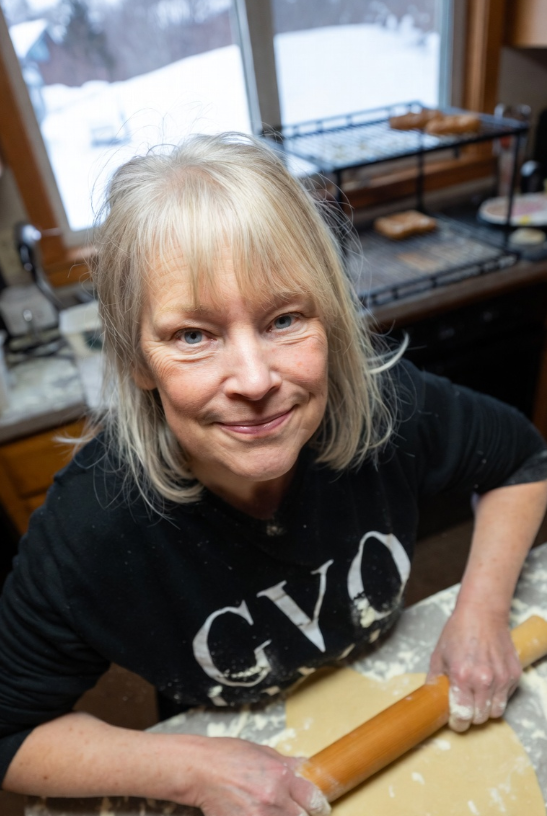
Linda Johansson
Week 309 of Linda’s 30-year story
· Duluth, Minnesota
Linda is a sixty-three-year-old retired nurse from Duluth, Minnesota, living alone in the house where she raised her children and said goodbye to her husband. She lost Paul to ALS in 2020 after two years of watching the kindest man she'd ever known lose everything but his dignity. She cooks Scandinavian comfort food and Minnesota hotdish and the pot roast Paul loved, and she sets two places at the table out of habit because it makes her feel less alone. Every recipe she writes is a person she's loved.
