The cold continues. It's been below zero for five consecutive days, which in Duluth is not unusual but is still an endurance test. The car needed to be plugged in every night — the block heater, which is a Duluth accessory as essential as a coat — and Paul's snow blower quit on Tuesday, which meant shoveling by hand, which meant Paul came inside red-faced and breathing hard and I gave him the look. The nurse look. The one that says: sit down, drink water, and do not argue.
He sat. He drank. The snow blower was fixed by Thursday. Paul took it to the repair shop on East Fourth Street, the same shop that's been fixing small engines since 1972, run by a man named Carl who can diagnose a snow blower by sound the way Paul can identify ships by foghorn. Carl said the carburetor needed cleaning. Paul said, "How much?" Carl said, "Forty dollars and a piece of your wife's limpa bread." This is how commerce works in Duluth. Currency is flexible.
I baked Carl a loaf. Paul delivered it. The snow blower runs fine.
The Damiano Center was cold on Thursday. The building is old and the heating system struggles on days like this. I made wild rice soup — extra thick, extra hot — and I noticed that Gerald was wearing a thin coat. A thin coat in Duluth in January is not a fashion choice. It's the only coat he has. I didn't say anything. I served him soup. The next Thursday, I brought a coat from the church donation pile — men's large, down-filled, barely worn. I left it on his table before he arrived. He wore it the following week. Neither of us mentioned it. Some kindnesses work best when they're anonymous, even when they're not.
Anna sent photos of Sophie at the U of M — in her dorm, in the dining hall, at her first study group. Sophie looks happy. She looks tired. She looks like every college freshman in January: slightly overwhelmed, slightly exhilarated, holding it together with coffee and determination. I sent her a care package — cinnamon rolls, pepparkakor, a tin of Mamma's lingonberry jam, and a note that said: "Eat something real. Love, Grandma."
I made kroppkakor again this week — the potato dumplings, filled with pork — because the cold demanded it. Heavy, starchy, warm. January food. Survival food. The kind of food that Swedish immigrants ate because they needed the calories to get through the winter, and that their descendants eat because the memory of cold is in the DNA even when the furnace works fine.
Paul ate three and fell asleep on the couch at seven-thirty. I covered him with a blanket. Sven was already asleep on the other end of the couch. I sat in the kitchen with the candles and my coffee and the sound of the two of them breathing and the wind outside and I wrote this. January. We endure.
The kroppkakor are the soul of a week like this one — heavy and filling and exactly right — but it’s the mornings that need tending too, especially when the cold doesn’t let up and Paul has to be out early with the snow blower before the day even starts. Overnight raised waffles are what I make when I want breakfast to be ready before the day demands anything of us: you mix the batter the night before, let the yeast do its quiet work while you sleep, and in the morning all you have to do is heat the iron. They come out crisp at the edges and soft in the middle, the way good things should be, and they hold up to lingonberry jam without flinching. January food doesn’t have to be heavy every single meal — sometimes it just has to be warm and already waiting.
Overnight Raised Waffles
Prep Time: 10 minutes + overnight rest | Cook Time: 25 minutes | Total Time: 8 hours 35 minutes | Servings: 6
Ingredients
- 2 cups all-purpose flour
- 1 tablespoon granulated sugar
- 1/2 teaspoon salt
- 1 packet (2 1/4 teaspoons) active dry yeast
- 2 cups whole milk, warmed to about 110°F
- 1/2 cup (1 stick) unsalted butter, melted and slightly cooled
- 2 large eggs
- 1/2 teaspoon vanilla extract
- Butter or nonstick spray for the waffle iron
- Lingonberry jam, maple syrup, or fresh fruit to serve
Instructions
- Mix the batter the night before. In a large bowl (the batter will rise, so use a bowl with room to spare), whisk together the flour, sugar, salt, and yeast. Pour in the warm milk and melted butter and stir until smooth. Cover the bowl loosely with plastic wrap or a clean kitchen towel and leave it at room temperature overnight, at least 8 hours.
- Finish the batter in the morning. When you’re ready to cook, whisk the eggs and vanilla extract into the overnight batter until fully incorporated. The batter will be bubbly and slightly loose — this is exactly right.
- Heat the waffle iron. Preheat your waffle iron to medium-high and brush or spray lightly with butter or nonstick spray.
- Cook the waffles. Pour enough batter to just fill your waffle iron (usually 1/2 to 3/4 cup depending on the size). Close the lid and cook until the waffle is deep golden brown and releases easily from the iron, about 4–5 minutes. Repeat with remaining batter.
- Keep warm if needed. Place finished waffles directly on the rack of a 200°F oven to keep crisp while you cook the rest. Avoid stacking them — they’ll steam and go soft.
- Serve. Bring to the table with lingonberry jam, a drizzle of maple syrup, or a handful of whatever fruit you have. They’re sturdy enough to hold up to whatever you put on them.
Nutrition (per serving)
Calories: 370 | Protein: 10g | Fat: 18g | Carbs: 42g | Fiber: 1g | Sodium: 260mg
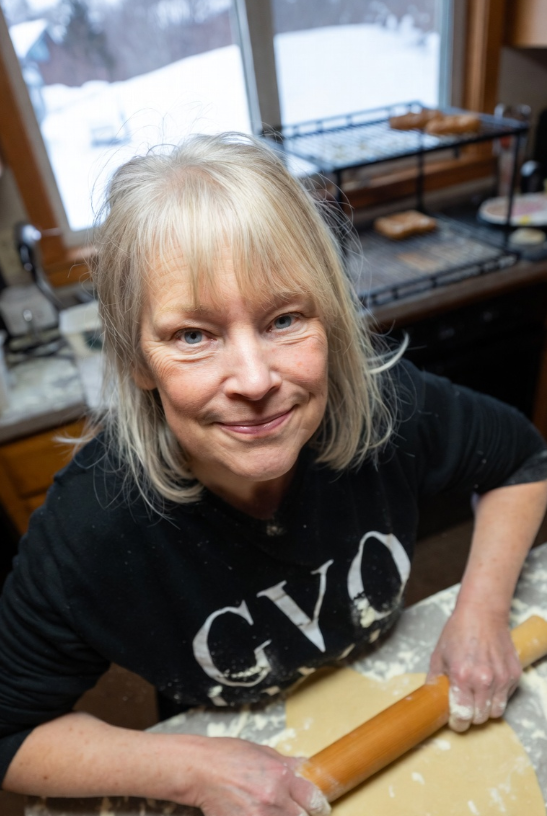
About the cook who shared this
Linda Johansson
Week 43 of Linda’s 30-year story
· Duluth, Minnesota
Linda is a sixty-three-year-old retired nurse from Duluth, Minnesota, living alone in the house where she raised her children and said goodbye to her husband. She lost Paul to ALS in 2020 after two years of watching the kindest man she'd ever known lose everything but his dignity. She cooks Scandinavian comfort food and Minnesota hotdish and the pot roast Paul loved, and she sets two places at the table out of habit because it makes her feel less alone. Every recipe she writes is a person she's loved.
