I read Paul's books in the evening. The shipwreck books, of course. The same chapters I have read forty times now. The repetition is the comfort. I am not reading for new information. I am reading because the act of opening Paul's books and turning Paul's pages is a form of sitting in the room with him. He is not in the room. The book was in his hand. The book is in my hand. The hands are connected through the book.
Peter called from Chicago. He sounded thinner than last week. He said work was fine. I do not believe him. He said his apartment was fine. I do not believe him either. He asked about the dog. He asked about the lake. He told me he loved me. I told him I loved him too. I told him about the bread I was baking. He said he could almost smell it through the phone. We hung up. I stood at the sink for a long minute. I did not know what else to do.
Sophie texted a photo of Mira eating cereal. Mira's face was covered in milk. The photo was lit from the side by morning light and the smile in it was uninhibited and full and I could not stop looking at it. I printed the photo. I taped it to the fridge. I have a system on the fridge now: a column for each grandchild, a column for each great-grandchild, photos rotated weekly. The fridge is the gallery. The gallery is the proof.
I cooked Beef bourguignon (Paul's favorite) this week. The French stew Paul learned to love when we honeymooned at the cabin and I bought a Julia Child book at a roadside stand. Beef chuck, bacon, mushrooms, pearl onions, red wine, beef stock, a bouquet garni of thyme and bay and parsley stems, three hours of low oven. Served over buttered noodles. Paul ate three plates the first time I made it. He proposed marriage retroactively.
Thursday at the Damiano Center: I made an extra pot of pea soup, the way Mamma taught me — yellow split peas, ham hock, onion, the whole of Sunday afternoon dedicated to its slow simmer. Gerald said, "Variety. We approve." The regulars approved too. One older woman ate three bowls and asked if she could take some home. I sent her home with a quart in a glass jar. She is bringing the jar back next Thursday. We have an arrangement.
I walked to the lake on Saturday. I stood at the spot where Paul and I used to walk — the bench at the end of the lakefront trail, the one with the brass plaque about a different Paul who died in 1972. I told my Paul about the week. About the kids. About the dog. About the soup. I do not feel foolish doing this. The lake is patient. The lake has, in some real sense, become my husband by proxy. I would not have predicted this in 1988. It has turned out to be true anyway.
It is enough. Paul is not here. Mamma is not here. Pappa is not here. Erik is not here. They are all here in the kitchen, in the smell, in the taste, in the wooden spoon and the bread pans and the marble slab. The dead are not where the body went. The dead are in the kitchen. It is enough.
The beef bourguignon was Paul’s, always—but the French kitchen belonged to both of us, and it has more than one room. When I pulled the Julia Child paperback from the shelf after dinner to find the page I’d dog-eared in 1989, I landed instead on her oyster fricassee, and I thought: yes, this one too. It is the same tradition—the same patience, the same cream and wine, the same conviction that a good sauce is an argument for staying at the stove. I made it the following evening with the kitchen still smelling of the bourguignon, and it felt like a continuation rather than a new thing. Paul would have approved. He approved of most things cooked slowly in butter.
Oyster Fricassee
Prep Time: 15 min | Cook Time: 20 min | Total Time: 35 min | Servings: 4
Ingredients
- 24 fresh oysters, shucked, liquor reserved (or 2 pints jarred oysters, drained, liquid reserved)
- 3 tablespoons unsalted butter
- 2 shallots, finely minced
- 2 cloves garlic, minced
- 1/2 cup dry white wine
- 1/2 cup reserved oyster liquor, strained
- 1 cup heavy cream
- 1 tablespoon fresh thyme leaves
- 1 bay leaf
- Salt and white pepper, to taste
- 2 tablespoons fresh flat-leaf parsley, finely chopped
- Crusty bread or toasted brioche, for serving
Instructions
- Prepare the oysters. Shuck oysters over a bowl to catch the liquor, or drain jarred oysters and reserve the liquid. Pat oysters dry with paper towels. Strain the liquor through a fine-mesh sieve and set both aside.
- Sauté the aromatics. In a wide, heavy skillet over medium heat, melt the butter until it foams. Add the shallots and cook, stirring frequently, for 3 to 4 minutes until softened and translucent. Add the garlic and cook 1 minute more, until fragrant.
- Build the sauce base. Pour in the white wine and strained oyster liquor. Raise the heat to medium-high and simmer, stirring occasionally, until the liquid is reduced by half, about 4 to 5 minutes.
- Add the cream and herbs. Pour in the heavy cream. Add the thyme and bay leaf. Reduce heat to medium and simmer, stirring occasionally, until the sauce thickens enough to coat the back of a spoon, about 6 to 8 minutes. Season with salt and white pepper.
- Finish with the oysters. Add the oysters to the pan in a single layer and gently stir to coat them in the sauce. Cook just until the edges of the oysters begin to curl and they are just heated through, about 2 to 3 minutes. Do not overcook—the oysters should be tender, not rubbery.
- Serve immediately. Remove and discard the bay leaf. Ladle the fricassee into shallow bowls. Scatter fresh parsley over the top and serve at once with crusty bread or toasted brioche to catch the sauce.
Nutrition (per serving)
Calories: 375 | Protein: 13g | Fat: 29g | Carbs: 11g | Fiber: 0g | Sodium: 510mg
About the cook who shared this
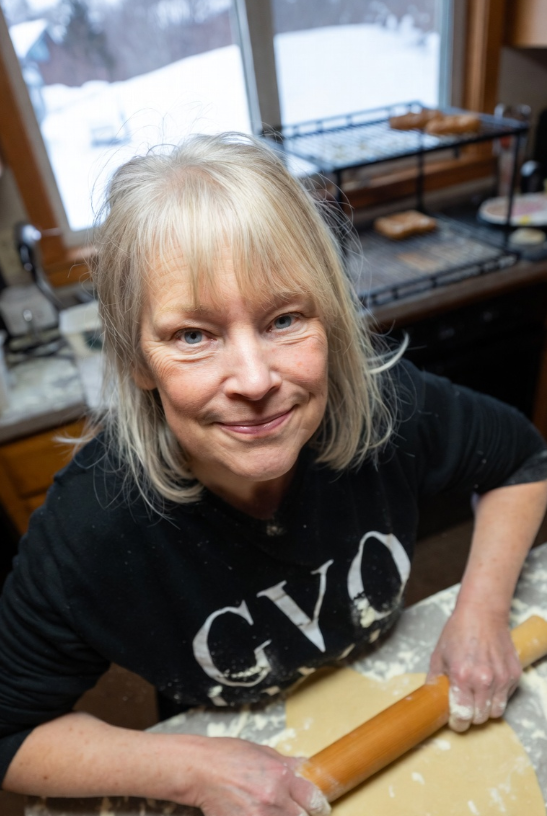
Linda Johansson
Week 307 of Linda’s 30-year story
· Duluth, Minnesota
Linda is a sixty-three-year-old retired nurse from Duluth, Minnesota, living alone in the house where she raised her children and said goodbye to her husband. She lost Paul to ALS in 2020 after two years of watching the kindest man she'd ever known lose everything but his dignity. She cooks Scandinavian comfort food and Minnesota hotdish and the pot roast Paul loved, and she sets two places at the table out of habit because it makes her feel less alone. Every recipe she writes is a person she's loved.
