
 By
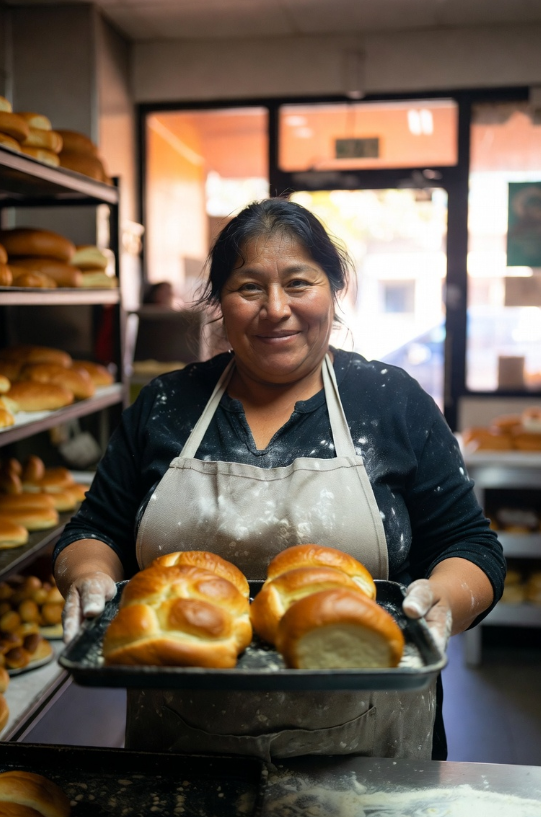
By The quiet of January. The bakery hums at a lower frequency — fewer customers, shorter lines, the morning rush more of a morning trickle. I use the slowness to clean, to organize, to do the maintenance that gets neglected when we're making five hundred conchas a day. I deep-cleaned the ovens this week. I reorganized the supply room. I fixed the wobble on table four, which has been wobbling since we opened and which I have been putting a folded napkin under for eighteen months. Luis said he would fix it. He has been saying he would fix it for eighteen months. I fixed it myself with a shim I cut from a wooden spoon. This is marriage. You wait for help and then you do it yourself and then you tell your husband you fixed it and he says, "I was going to do that," and you say, "I know," and both of you know that he was not going to do that, and both of you let the fiction stand because marriage is built on small, useful fictions.
Isabella got her PSAT practice scores back. She is thirteen, taking a practice test two years early, and she scored in the 93rd percentile. She showed me the results with the same not-proud face she uses for everything, and I said, "This is incredible, mija," and she said, "It's practice. The real one is what matters." She is thirteen and she already understands that practice is not performance, which is a level of maturity that most adults don't have. She will test perfectly. I know this because I know her, and knowing Isabella means knowing that whatever she does, she does completely.
Sofia came to the bakery on Saturday and asked if she could redesign the menu board. The current one is my handwriting on a whiteboard, and it is functional but not beautiful. Sofia wants to make a chalkboard menu with hand-lettering and illustrations. She showed me designs she found online — bakery menus with drawings of conchas and coffee cups and little icons — and I said yes, because she was right and because saying yes to Sofia's bakery ideas is becoming a habit I am pleased to develop.
I made caldo de pollo this week — chicken soup, the simple kind, with whole chicken pieces simmered until the meat falls off the bone, with rice and vegetables and a squeeze of lime. Not Rosa's recipe — Rosa made caldo de res, beef soup, the Sunday soup. Caldo de pollo is my recipe. It is the soup I make on cold January nights when the house needs warming and the family needs something that says "I love you" in liquid form. Chicken soup is universal — every culture has it — but mine has cumin and lime and cilantro and the particular warmth of a Mexican kitchen on a cold night, and it is mine, not Rosa's, and I am learning to be okay with things that are mine.
Luis fixed the leak in the bakery roof. Actually fixed it this time — not the Band-Aid fix from June but a real repair, with flashing and sealant and the help of his cousin Ricardo, who does construction and who owed Luis a favor. The leak is fixed. The bucket is gone. The corner of the dining area that smelled faintly of damp now smells like bread, which is what every corner of a bakery should smell like. One fewer thing to worry about. One fewer bucket between me and the bakery I imagine — the bakery without leaks, without wobbling tables, without credit card debt, the bakery that is not yet but might be, the bakery that Rosa would walk into and nod and say, "This is good, mija. This is good."
The caldo was for the soul — that long, slow simmer that fills the whole house and says we are warm, we are fed, we are okay. But not every January night has three hours in it. On the nights when the oven cleaning and the shim-cutting and the score-report conversations have already taken everything I had, I reach for something faster, something that still feels like effort without requiring all of it. This pesto chicken has become that recipe for me: fifteen minutes of work, a hot oven doing the rest, and a plate that still manages to feel like I meant it.
Pesto Chicken
Prep Time: 10 minutes | Cook Time: 28 minutes | Total Time: 38 minutes | Servings: 4
Ingredients
- 4 boneless, skinless chicken breasts (about 6 oz each)
- 1/2 cup basil pesto, store-bought or homemade
- 1 cup cherry tomatoes, halved
- 4 oz fresh mozzarella, sliced into rounds
- 2 tablespoons olive oil
- 1/2 teaspoon garlic powder
- 1/2 teaspoon kosher salt
- 1/4 teaspoon black pepper
- Fresh basil leaves, for garnish
- Flaky sea salt, optional, for finishing
Instructions
- Preheat the oven. Heat oven to 400°F (200°C). Lightly oil a 9x13-inch baking dish or rimmed sheet pan.
- Season the chicken. Pat chicken breasts dry with paper towels. Drizzle with olive oil and season all over with garlic powder, salt, and pepper.
- Sear for color. Heat a large oven-safe skillet over medium-high heat. Add the chicken and sear for 2 to 3 minutes per side until golden. (If skipping this step, go straight to the baking dish — the oven will still deliver a juicy result.)
- Top with pesto. Spoon 2 tablespoons of pesto over the top of each chicken breast, spreading to cover. Scatter the halved cherry tomatoes around and over the chicken.
- Bake. Transfer to the oven and bake for 20 to 22 minutes, until the chicken reaches an internal temperature of 165°F and the tomatoes have softened and begun to blister.
- Add the mozzarella. Remove from the oven and lay mozzarella slices over each breast. Return to the oven for 3 to 4 minutes, just until the cheese melts and begins to bubble at the edges.
- Rest and serve. Let the chicken rest for 5 minutes before serving. Scatter fresh basil leaves over the top and finish with a pinch of flaky sea salt if desired. Serve over pasta, rice, or with crusty bread to catch the pan juices.
Nutrition (per serving)
Calories: 390 | Protein: 44g | Fat: 22g | Carbs: 5g | Fiber: 1g | Sodium: 540mg