October. The leaves turned and the world went gold and I drove along Skyline Drive on Thursday and looked at the city below and the lake beyond and the colors were the same as every October — impossible, extravagant, Duluth showing off — and I pulled over and sat in the car and cried.
I cry in the car now. It's my place. The car is the one space where I'm not a nurse, not a wife, not a caregiver, not a cook. In the car, with the doors closed and the engine off and the lake visible through the windshield, I am a woman whose husband is dying, and I cry, and the crying takes five or ten minutes, and then I stop and I check my face in the mirror and I drive home and I'm steady again.
Five or ten minutes. Every few days. That's my allowance. That's what I give myself. The rest of the time: steady. For Paul. For the family. For the work.
Paul's walking is slower with the cane. His morning walks are down to fifteen minutes — around the block, barely. He comes home winded, which is new. The respiratory therapist at the clinic says his breathing capacity is at ninety percent. Ninety percent sounds fine. It's not fine. It's ten percent less than it should be, and the direction is only one way.
Elsa has been a revelation. She comes four or five times a week now. She cooks, she cleans, she sits with Paul while I take Sven for a walk or go to the Damiano Center or just drive. She doesn't hover. She doesn't fuss. She's present the way a park ranger is present in the wilderness — attentive, calm, ready to act if needed, content to observe if not.
She told Paul about the wolves this week — a pack near the Boundary Waters, a territorial dispute between two alphas. Paul listened with his full attention and said, "Wolves and shipwrecks. Both stories about survival in hostile environments." Elsa said, "The wolves usually survive." Paul said, "The ships don't." They both smiled. The dark humor of a father and daughter who understand each other.
I made a fall dinner: pork roast with apples and root vegetables. The pork was from the co-op, the apples from the farm stand, the root vegetables from what's left in the garden — a few carrots, the last beets. Everything roasted together in one pan, the juices mingling, the kitchen filling with the smell of October.
Paul ate a portion I'd cut into small pieces. He used the weighted fork. He managed. Managing is the word of this year. Last year the word was "watching." This year: managing.
The leaves are falling. The car is my crying place. The daughter is cooking. The husband is managing. The wife is steady.
Steady. Five more minutes.
That October dinner — the one-pan roast, the kitchen smelling like the season itself — reminded me that the best thing I can do on the hardest days is put something slow and good into the pot and let it work without me. This slow-cooker faux prime rib roast has become that dish: I season it in the morning, set it before Paul’s walk, and by the time Elsa has come and gone and the light has gone gold through the window, dinner is ready and the house smells like a place worth being in. It’s not complicated. It doesn’t need to be.
Slow-Cooker Faux Prime Rib Roast
Prep Time: 15 min | Cook Time: 8 hrs | Total Time: 8 hrs 15 min | Servings: 8
Ingredients
- 3 1/2 to 4 lb beef eye of round roast or chuck roast
- 2 tsp kosher salt
- 1 tsp freshly ground black pepper
- 1 tsp garlic powder
- 1 tsp dried rosemary, crushed
- 1 tsp dried thyme
- 1/2 tsp onion powder
- 1/2 tsp smoked paprika
- 4 cloves garlic, minced
- 1 cup beef broth
- 2 tbsp Worcestershire sauce
- 1 tbsp olive oil
- 1 medium yellow onion, sliced into rings
- 3 medium carrots, cut into 2-inch pieces
- 2 sprigs fresh rosemary (optional, for finishing)
Instructions
- Mix the dry rub. Combine salt, pepper, garlic powder, dried rosemary, thyme, onion powder, and smoked paprika in a small bowl. Pat the roast dry with paper towels, then rub the spice mixture all over the surface of the meat. Press it in firmly so it adheres.
- Sear the roast. Heat olive oil in a large skillet over medium-high heat. When the oil shimmers, add the roast and sear for 3 to 4 minutes per side until a deep brown crust forms on all sides. Do not rush this step — the crust is where the flavor lives.
- Build the slow-cooker base. Scatter the sliced onion and carrot pieces across the bottom of a 6-quart slow cooker. Pour in the beef broth and Worcestershire sauce. Add the minced garlic and stir briefly to combine.
- Add the roast and cook. Set the seared roast on top of the vegetables. Lay fresh rosemary sprigs over the top if using. Cover and cook on LOW for 7 to 8 hours, until the meat is very tender and an instant-read thermometer reads at least 190°F for pull-apart texture, or 145°F if you prefer it sliceable and medium.
- Rest and slice. Transfer the roast to a cutting board and tent loosely with foil. Let it rest for 10 to 15 minutes before slicing against the grain. Spoon the pan juices and softened vegetables over the top to serve.
Nutrition (per serving)
Calories: 310 | Protein: 38g | Fat: 14g | Carbs: 6g | Fiber: 1g | Sodium: 520mg
About the cook who shared this
Linda Johansson
Week 132 of Linda’s 30-year story
· Duluth, Minnesota
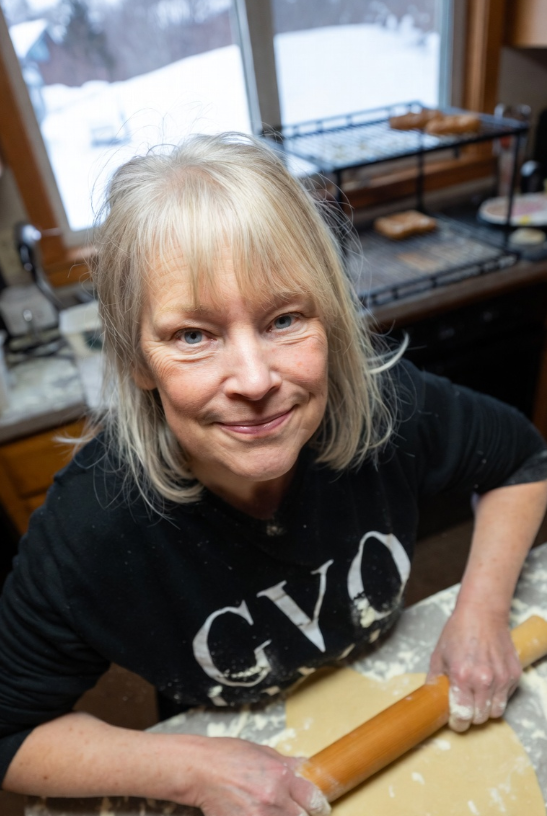
Linda is a sixty-three-year-old retired nurse from Duluth, Minnesota, living alone in the house where she raised her children and said goodbye to her husband. She lost Paul to ALS in 2020 after two years of watching the kindest man she'd ever known lose everything but his dignity. She cooks Scandinavian comfort food and Minnesota hotdish and the pot roast Paul loved, and she sets two places at the table out of habit because it makes her feel less alone. Every recipe she writes is a person she's loved.
