
 By
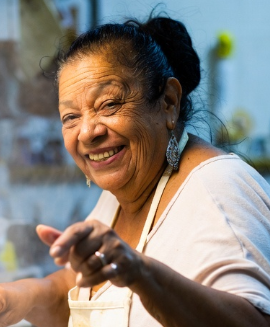
By Late June. David's restaurant reopened. He sent a photo of opening night — the tables full, the kitchen blazing, a plate of mofongo that looked like it belonged in a museum. I looked at the photo and called him. I said, David, the plate is beautiful. The mofongo looks — I paused, because the pause is the compliment, the hesitation before the assessment, the space where the judgment forms — good. He said, Just good? I said, David. He said, Yes, Mami. I said, The plate is beautiful and the mofongo looks excellent. He was quiet. Then he said, Mami, you've never used that word about my food. I said, I have never used that word about anyone's food except Abuela Consuelo's. He understood. He was silent for a long time. Then he said, Thank you, Mami. Then he said, I have to go, there's a ticket on the pass. And he was gone, back into his kitchen, and I stood in my kitchen and smiled at my phone because my son's mofongo is excellent and the excellent is mine, the excellent is the teaching, the excellent is every Saturday morning in my kitchen when he was fourteen and I said, More garlic, David, and he added more garlic and the adding made him.
Mami had a good week. The summer seems to help — the light, the warmth, the sun through her apartment windows, the longer days that give the brain more light to work with. She knew my name all four times I visited. She told a story about making pasteles with Abuela Consuelo that I had not heard before — a specific detail about the achiote, how Consuelo toasted the seeds in oil before grinding them, how the toasted oil was darker and richer than raw achiote. I wrote it in the notebook immediately. Page seventy-four. The detail may be memory or invention — the fog makes the line between them blurry — but I wrote it because even invented details from Mami's mouth carry the truth of the tradition, and the truth is in the telling, not the verification.
David’s excellent mofongo and Mami’s detail about the toasted achiote oil both say the same thing to me: the best cooking is not about many things, it is about a few things done with full attention. I kept thinking about that all week, and I kept coming back to this slow cooker salsa verde chicken — four ingredients, long and patient heat, and a bright, layered result that has no business tasting as deep as it does. The salsa verde does what Consuelo’s toasted achiote oil did: it transforms, it darkens, it gives the whole dish a richness that raw and hurried cooking never could.
4-Ingredient Slow Cooker Salsa Verde Chicken
Prep Time: 5 minutes | Cook Time: 6–8 hours (low) or 3–4 hours (high) | Total Time: Up to 8 hours 5 minutes | Servings: 6
Ingredients
- 2 lbs boneless, skinless chicken breasts (or thighs)
- 1 (16 oz) jar salsa verde
- 4 oz cream cheese, cut into cubes and softened
- 1 (1 oz) packet taco seasoning
Instructions
- Season the chicken. Place the chicken breasts in the bottom of a 4–6 quart slow cooker. Sprinkle the taco seasoning evenly over the chicken, turning to coat both sides.
- Add salsa verde. Pour the entire jar of salsa verde over the seasoned chicken, making sure the pieces are well covered.
- Add cream cheese. Scatter the cream cheese cubes on top of the salsa verde and chicken. Do not stir — the cream cheese will melt and incorporate during cooking.
- Cook low and slow. Cover and cook on LOW for 6–8 hours or on HIGH for 3–4 hours, until the chicken is fully cooked through and tender enough to shred easily with two forks.
- Shred and combine. Using two forks, shred the chicken directly in the slow cooker. Stir well to pull the melted cream cheese and salsa verde into a cohesive, creamy sauce coating all the chicken.
- Serve. Serve over rice, in warm tortillas, over burrito bowls, or with roasted vegetables. Top with fresh cilantro, sliced avocado, or a squeeze of lime if desired.
Nutrition (per serving)
Calories: 275 | Protein: 34g | Fat: 11g | Carbs: 7g | Fiber: 1g | Sodium: 680mg