I told Erik on Sunday. We stood in his woodworking shop — it's a converted garage, warm from the space heater, smelling of cedar and sawdust — and I told him. He was sanding a shelf. He stopped sanding. He put the sandpaper down. He said, "Paul." Just the name. Then: "How long?"
I told him the prognosis. He nodded. He picked up the sandpaper. He started sanding again. This is how Erik processes information: with his hands. He sanded for five minutes while I stood there, and then he said, "What do you need?" I said, "I don't know yet." He said, "When you know, tell me." And he sanded. And I stood. And the cedar dust settled on my coat and I breathed it in and it smelled like Pappa's workshop in the basement, the one he worked in before the cancer took his hands and then took everything.
Erik will carry this quietly, the way he carries everything. He won't call. He won't make speeches. He'll show up with his toolbox when something needs fixing and he'll bring fish from the river and he'll sit at my kitchen table on Saturdays and drink coffee and not say much and all of it — the showing up, the fish, the coffee, the silence — will be his way of saying: I'm here.
I told Karin by phone on Wednesday. Stockholm. Midnight her time. She cried. Karin is the crier in the family — the one who carries the Johansson grief openly, which makes her either the bravest or the most un-Scandinavian, depending on your perspective. She said, "I'm coming." I said, "Not yet. There's nothing to do yet." She said, "I'm coming anyway." I said, "After winter. Come in spring." She said she would.
Astrid: I called her Thursday. She was quiet in the way that social workers are quiet — absorbing, processing, cataloguing. She said, "How are you, Linda?" And the question undid me because everyone asks about Paul and they should ask about Paul, but Astrid asked about me, and the "me" question found the crack in the wall I've been building and the wall held but barely.
I said, "I'm making bread." She said, "Of course you are."
I haven't told Peter or Elsa yet. Next week. I need next week.
I made a simple dinner every night this week because simple is what I have capacity for. Monday: scrambled eggs and toast. Wednesday: grilled cheese and tomato soup (from the pantry, my marinara, thinned into soup). Friday: pasta with butter and Parmesan, which is what you eat when the world is too heavy for complex sauces.
Paul ate everything. He doesn't complain. He never complains. He's the man who said "Well, this is going to be hard" to a terminal diagnosis and meant it as a statement of fact, not a protest. Paul Johansson doesn't protest. He observes. He adapts. He eats pasta with butter and says, "This is good, Linda" and means it, because Paul means everything he says.
We will take care of him. That's what Mamma said. We will.
Friday’s dinner was pasta with butter and Parmesan — the plainest thing I know how to make, and the truest. But by Sunday, when I had told Erik and the cedar dust had settled on my coat and I had driven home and stood in my own kitchen, I wanted something just slightly more than plain: the same simplicity, but with a handful of fresh tomatoes because the tomatoes were there and because Paul has always loved them. This is that pasta — nothing heavy, nothing complicated, just good olive oil and a quick sauce and butter stirred in at the end to make it feel like something. It fed us all week. It will feed you too.
Spaghetti with Fresh Tomato Sauce
Prep Time: 10 minutes | Cook Time: 20 minutes | Total Time: 30 minutes | Servings: 4
Ingredients
- 12 oz spaghetti
- 3 tablespoons olive oil
- 4 cloves garlic, thinly sliced
- 1/4 teaspoon red pepper flakes (optional)
- 1 1/2 lbs ripe tomatoes (about 4 medium), cored and roughly chopped
- 1/2 teaspoon kosher salt, plus more for pasta water
- 1/4 teaspoon black pepper
- 2 tablespoons unsalted butter
- 1/2 cup freshly grated Parmesan, plus more for serving
- Small handful fresh basil leaves, torn (optional)
Instructions
- Salt and boil the pasta water. Bring a large pot of water to a boil. Salt it generously — it should taste faintly of the sea. Add the spaghetti and cook according to package directions until just al dente. Before draining, reserve 1 cup of pasta cooking water.
- Build the sauce. While the pasta cooks, warm the olive oil in a large skillet over medium heat. Add the garlic and red pepper flakes if using. Cook, stirring, for about 90 seconds until the garlic is fragrant and just turning golden at the edges — do not let it brown.
- Add the tomatoes. Add the chopped tomatoes, salt, and pepper to the skillet. Stir to combine. Cook over medium heat, stirring occasionally and pressing the tomatoes gently with the back of a spoon, for 12 to 15 minutes until the tomatoes have broken down into a loose, chunky sauce.
- Finish with butter. Reduce the heat to low. Add the butter to the sauce and stir until melted and glossy. Taste and adjust salt as needed.
- Toss the pasta. Add the drained spaghetti directly to the skillet. Toss well to coat, adding pasta water a splash at a time — 1/4 to 1/2 cup — until the sauce clings to the noodles and looks silky rather than dry.
- Add the Parmesan. Remove the pan from heat. Add the 1/2 cup Parmesan and toss again until melted in. Scatter torn basil over the top if using.
- Serve. Divide among bowls. Pass extra Parmesan at the table. Eat while it’s warm.
Nutrition (per serving)
Calories: 510 | Protein: 17g | Fat: 18g | Carbs: 72g | Fiber: 4g | Sodium: 390mg
About the cook who shared this
Linda Johansson
Week 97 of Linda’s 30-year story
· Duluth, Minnesota
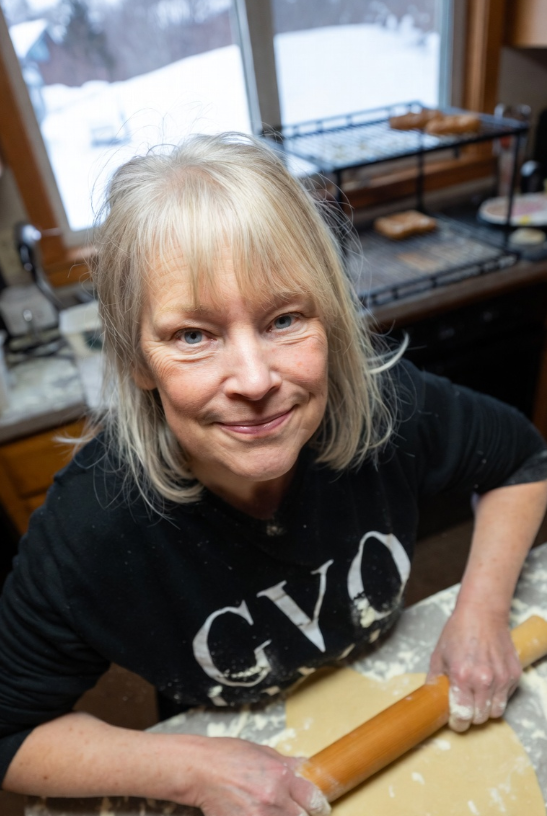
Linda is a sixty-three-year-old retired nurse from Duluth, Minnesota, living alone in the house where she raised her children and said goodbye to her husband. She lost Paul to ALS in 2020 after two years of watching the kindest man she'd ever known lose everything but his dignity. She cooks Scandinavian comfort food and Minnesota hotdish and the pot roast Paul loved, and she sets two places at the table out of habit because it makes her feel less alone. Every recipe she writes is a person she's loved.
