
 By
By Two months in. The pandemic is not over but the acute terror has faded into something duller, more persistent — a background radiation of anxiety that colors everything without dominating anything. The calls at the station have stabilized. The PPE supply is holding. The crew is healthy. These are victories measured in negatives: no outbreaks, no shortages, no casualties. The absence of disaster as success. This is the math of a pandemic.
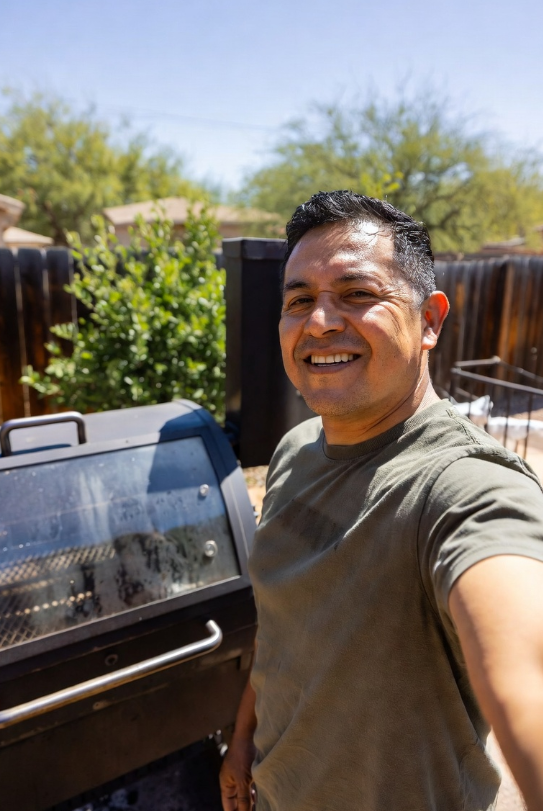
The drive-by feeding has expanded. What started as my Tuesday-Friday circuit has become a neighborhood operation. Jessica posted about it on the local community Facebook group, and three other families volunteered to cook and deliver. We now have a rotating schedule: I cook Tuesdays, the Nguyens cook Wednesdays, a retired teacher named Mrs. Patterson cooks Thursdays, and a young couple from two streets over cooks Fridays. Between us, we are feeding fourteen households — elderly, immunocompromised, isolated. The food is different every day (my contributions are obviously the best, but I am not in this for the competition — that is for the BBQ circuit).
The community response has been the bright spot of this whole terrible spring. People who did not know each other before the pandemic are cooking for each other, checking on each other, standing in driveways six feet apart and talking about their gardens and their kids and their fear. The virus took away the cookout. But it did not take away the impulse to feed. The impulse to feed is older than any virus. It is the first thing humans learned to do together, and it is the last thing we will stop doing.
At home: Sofia finished her kindergarten worksheets for the year. All of them. She is six and she has completed the entire packet a month early because the girl treats schoolwork the way she treats soccer: with focus, with intensity, with the need to finish first. I have been supplementing with cooking lessons (fractions, measurement, following instructions) and reading (she is devouring books at a rate that makes the library app's algorithm confused). She read me a chapter book this week — a whole chapter, out loud, at the kitchen table — and her reading voice was steady and clear and I thought: this child will be fine. Whatever the world throws at her, she will be fine.
Diego has learned to say "pandemic," which he pronounces "pan-DEMIC" with the emphasis on the second syllable and which he uses to describe any situation he does not like. "No cookies? Pandemic!" "Bath time? Pandemic!" "Sofia will not share? PANDEMIC!" The word has become his universal protest. It is the most Diego response to a global crisis imaginable.
When you’re cooking for fourteen households on a Tuesday, you need something that holds up in a foil pan, reheats without turning to sawdust, and tastes like somebody actually cared — because somebody did. This is the recipe I kept coming back to on my delivery days, the one I’d slide into the back of the truck alongside the Nguyens’ spring rolls and Mrs. Patterson’s casseroles. If the impulse to feed is older than any virus, then Special Delivery Chicken is the recipe I’d want carrying that impulse to someone’s door.
Special Delivery Chicken
Prep Time: 15 minutes | Cook Time: 45 minutes | Total Time: 1 hour | Servings: 6
Ingredients
- 6 boneless, skinless chicken breasts (about 6 oz each)
- 1 can (10.5 oz) condensed cream of mushroom soup
- 1 cup sour cream
- 1/2 cup chicken broth
- 1 packet (1 oz) dry onion soup mix
- 1 teaspoon garlic powder
- 1/2 teaspoon black pepper
- 1/2 teaspoon paprika
- 2 tablespoons olive oil
- Fresh parsley, chopped, for garnish (optional)
Instructions
- Preheat and prep. Preheat your oven to 350°F. Lightly grease a 9x13-inch baking dish with olive oil or nonstick spray.
- Season the chicken. Pat the chicken breasts dry and rub them with olive oil. Season both sides with garlic powder, black pepper, and paprika, then arrange in a single layer in the prepared baking dish.
- Make the sauce. In a medium bowl, whisk together the cream of mushroom soup, sour cream, chicken broth, and dry onion soup mix until smooth and combined.
- Top and cover. Pour the sauce evenly over the chicken breasts, making sure each piece is well coated. Cover the dish tightly with aluminum foil.
- Bake covered. Bake at 350°F for 35 minutes, until the chicken is mostly cooked through and the sauce is bubbling around the edges.
- Finish uncovered. Remove the foil and bake for an additional 10 minutes, until the top is lightly golden and the chicken registers 165°F at the thickest part on an instant-read thermometer.
- Rest and serve. Let the chicken rest for 5 minutes before serving. Garnish with fresh parsley if desired. Serve over egg noodles, mashed potatoes, or steamed rice — and pack leftovers in foil containers for easy delivery.
Nutrition (per serving)
Calories: 320 | Protein: 38g | Fat: 14g | Carbs: 8g | Fiber: 0g | Sodium: 780mg