
 By
By Last week of January and I submitted my application for the regional science fair, which is the next level above the school competition that I won. The regional fair is in March and attracts students from across Baton Rouge and the surrounding parishes. I am presenting the roux project, expanded — I added a fourth stage (blond at five minutes, blond-medium at fifteen, peanut butter at twenty-five, dark chocolate at thirty-five) and included more precise temperature data that my new kitchen thermometer helped me gather. The hypothesis is the same: the Maillard reaction explains the flavor and color progression of a dark roux. The data is better. The presentation will be better.
Jada asked if I was nervous about the regional fair. I told her I was focused, which is different from nervous. Nervous means you do not know what is going to happen. Focused means you know what needs to happen and you are working to make it happen. She said I was going to win. I said I did not know that. She said she did. I said she did not have access to the data of all the other regional competitors. She said she had access to data on me. I considered that. It is a fair point.
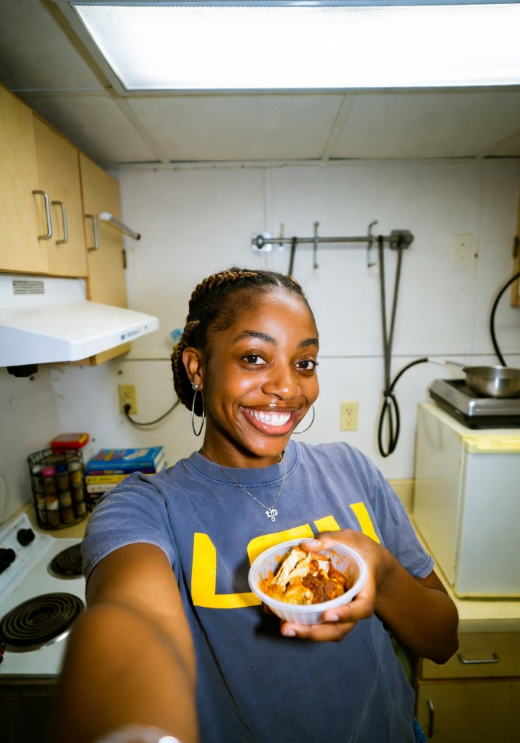
I made étouffée with MawMaw Shirley on Saturday, the third session, and this time she let me do the seasoning at the end entirely on my own. She stood back. I tasted. I adjusted. I tasted again. The spice level was right, the salt was right, the richness from the butter was right. MawMaw tasted it and said mmm, which is the sound she makes when she approves of something without wanting to make a big declaration about it. Mmm is the highest praise in her vocabulary. Higher than nothing-wrong, which is good. Mmm is actually good.
I went home and wrote down the full recipe for the first time, in the notebook I keep for recipes that I have now learned to make from scratch. The list is growing.
The reason I keep coming back to dishes that require you to taste as you go is that tasting as you go is the actual skill—it’s what MawMaw Shirley was really testing when she stepped back and let me finish the étouffée on my own. Risotto asks for exactly that same attentiveness: you are not following a timer, you are following the pot, adjusting salt and richness at each stage the same way I adjusted the spice and butter that Saturday. I made this the following week, alone in my kitchen, and wrote it into the same notebook.
Spring Pea and Asparagus Risotto
Prep Time: 15 minutes | Cook Time: 35 minutes | Total Time: 50 minutes | Servings: 4
Ingredients
- 5 cups low-sodium vegetable broth
- 2 tablespoons unsalted butter, divided
- 1 tablespoon olive oil
- 1 medium yellow onion, finely diced
- 3 cloves garlic, minced
- 1 1/2 cups Arborio rice
- 1/2 cup dry white wine
- 1 bunch asparagus (about 12 oz), tough ends removed, cut into 1-inch pieces
- 1 cup fresh or frozen peas
- 1/2 cup freshly grated Parmesan cheese, plus more for serving
- 1 tablespoon fresh lemon juice
- 1 teaspoon lemon zest
- Salt and freshly ground black pepper, to taste
- 2 tablespoons fresh parsley, chopped
Instructions
- Warm the broth. Pour the vegetable broth into a medium saucepan and set it over low heat. Keep it at a gentle simmer throughout cooking—cold broth will slow your risotto down and affect the texture.
- Build the base. In a wide, heavy-bottomed pot or Dutch oven, melt 1 tablespoon of butter with the olive oil over medium heat. Add the onion and cook, stirring occasionally, until softened and translucent, about 5 minutes. Add the garlic and cook 1 minute more.
- Toast the rice. Add the Arborio rice and stir to coat in the fat. Toast for about 2 minutes, until the edges of the grains look slightly translucent. This step develops flavor and helps the rice hold its structure.
- Add the wine. Pour in the white wine and stir constantly until it is fully absorbed, about 2 minutes.
- Ladle and stir. Add the warm broth one ladleful at a time (about 3/4 cup each), stirring frequently and waiting until each addition is mostly absorbed before adding the next. Continue this process for 20–25 minutes, until the rice is creamy and tender with just a slight bite at the center.
- Add the vegetables. When you have about 2 ladlefuls of broth remaining, stir in the asparagus pieces. After 3 minutes, add the peas. Continue cooking and adding broth until the vegetables are just tender and the rice is fully cooked.
- Finish and season. Remove from heat. Stir in the remaining tablespoon of butter, the Parmesan, lemon juice, and lemon zest. Now taste carefully—adjust salt, pepper, and lemon to your palate. This is the moment the dish becomes yours.
- Serve immediately. Spoon into warm bowls and top with fresh parsley and extra Parmesan. Risotto waits for no one; serve it right away.
Nutrition (per serving)
Calories: 420 | Protein: 14g | Fat: 12g | Carbs: 62g | Fiber: 5g | Sodium: 480mg