
 By
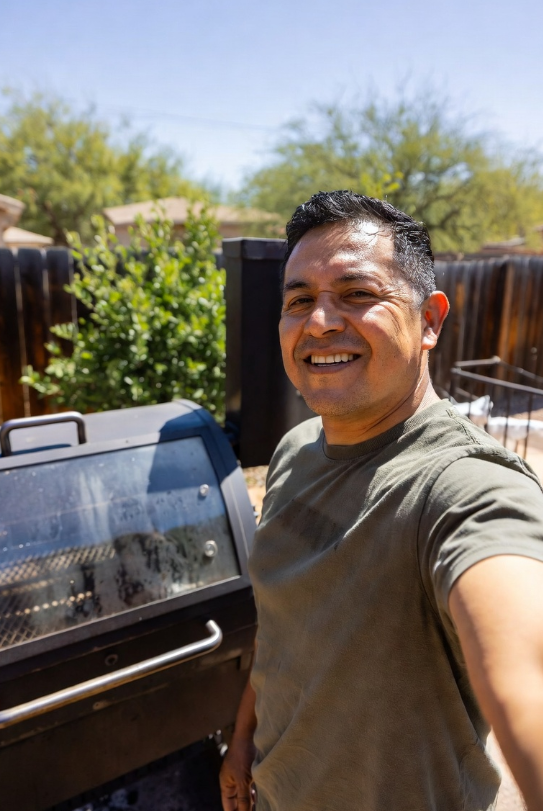
By January in Phoenix. The good month. The month that sells real estate and convinces snowbirds to buy second homes. Sixty-eight degrees, blue sky, the mountains sharp and clear against the horizon like someone cut them out of construction paper. I grilled five out of seven days this week because I could, because the weather allowed it, because the grill had been patient through summer and newborn season and now it was our time.
Diego is five and a half months old and has started solid food. The pediatrician gave us the green light at his five-month checkup, and Jessica bought a high chair and a collection of puréed vegetables from the store. I looked at the little jars of factory-made baby food and felt something between disdain and opportunity. My son is not eating food from a jar. My son is eating food from me.
So I made baby food. Homemade, from scratch, because I am Marcus Rivera and I have standards that extend to people who don't have teeth. Sweet potato, roasted and puréed with a little breast milk. Avocado, mashed smooth. Butternut squash, steamed and blended. Peas, boiled and strained through a fine mesh to remove the skins. Each one portioned into ice cube trays and frozen, ready to thaw and serve. Diego's first real food was the sweet potato. I put a spoonful on his tray and he stuck his entire hand in it and then put his hand in his mouth and then looked at me with an expression that could only be described as "what just happened and can it happen again?"
Sofia was jealous. Not of the food — she eats real food and doesn't want purée — but of the attention. Diego in the high chair, three adults watching him eat, cheering every spoonful like he'd scored a touchdown. Sofia said "I can eat too" and grabbed a banana and ate it with aggressive eye contact that said "I was here first and I am better at eating than him." She's not wrong. She's been eating for three years. Diego is a rookie. But the rookie shows promise.
Made bulgogi at the firehouse this week — Korean marinated beef, thinly sliced, grilled fast over high heat. The marinade: soy sauce, pear juice, sesame oil, garlic, ginger, brown sugar, gochujang for heat. Served over rice with pickled radish and sesame cucumber salad. The crew has fully accepted that "Chef Rivera's kitchen" is an international operation. Ruiz said "what country are we in today?" and I said "Korea" and he said "yesterday it was Mexico" and I said "tomorrow it might be Thailand" and he said "as long as there's rice" and I said "there's always rice." Rice is the universal diplomat of the kitchen.
The bulgogi was a hit, but it got me thinking about what else I could do with that high-heat grill and a good Asian marinade. Char siu — Chinese barbecue — lives in that same neighborhood: sweet, savory, sticky, caramelized. The kind of meat that makes Ruiz forget to ask what country we’re in because his mouth is too full to talk. Phoenix in January means I’m grilling every chance I get, and this one — pork belly ribs lacquered until they’re almost candy — is going into the regular rotation at the station and at home.
Sticky Chinese BBQ Pork Belly Ribs (Char Siu)
Prep Time: 20 minutes + 4 hours marinating | Cook Time: 45 minutes | Total Time: 5 hours 5 minutes | Servings: 4
Ingredients
- 2 lbs pork belly ribs (flanken-cut or St. Louis-style spareribs)
- 3 tablespoons hoisin sauce
- 2 tablespoons soy sauce
- 2 tablespoons honey
- 1 tablespoon oyster sauce
- 1 tablespoon Chinese rice wine (Shaoxing wine)
- 1 tablespoon sesame oil
- 1 tablespoon brown sugar
- 2 teaspoons Chinese five-spice powder
- 1 teaspoon red fermented bean curd (nam yue), optional for color and depth
- 3 cloves garlic, minced
- 1 teaspoon freshly grated ginger
- 1/2 teaspoon white pepper
- 1 tablespoon honey, for glazing
- Sesame seeds and sliced scallions, for garnish
Instructions
- Make the marinade. In a bowl, whisk together hoisin sauce, soy sauce, honey, oyster sauce, rice wine, sesame oil, brown sugar, five-spice powder, bean curd (if using), garlic, ginger, and white pepper until smooth.
- Marinate the ribs. Place pork belly ribs in a large zip-top bag or shallow dish. Pour the marinade over the meat and turn to coat evenly. Refrigerate for at least 4 hours, or overnight for the best flavor.
- Preheat the grill. Heat your grill to medium-high, around 400°F. If using an oven, preheat to 400°F and line a baking sheet with foil.
- Grill the ribs. Remove ribs from the marinade, reserving the leftover marinade. Grill ribs for 6–8 minutes per side, basting with reserved marinade every few minutes, until caramelized and cooked through with an internal temperature of 145°F. Alternatively, roast on the prepared baking sheet for 35–40 minutes, flipping and basting halfway through.
- Glaze and rest. During the final 5 minutes, brush ribs with the extra tablespoon of honey for a sticky, lacquered finish. Remove from heat and let rest for 5 minutes.
- Serve. Slice between the bones if needed, arrange on a platter, and garnish with sesame seeds and sliced scallions. Serve over steamed rice with pickled vegetables on the side.
Nutrition (per serving)
Calories: 480 | Protein: 22g | Fat: 34g | Carbs: 21g | Fiber: 1g | Sodium: 890mg