
 By
By It is Sunday afternoon, and my kitchen smells like cumin and browning beef and something I can only describe as working. There are eight quart-sized freezer bags lined up on my counter like I am running a small assembly operation, which I suppose I am. The soup has been cooling for forty minutes—I made a double batch this morning while Noah watched cartoons and Lily and Mason argued about something that I have already, mercifully, forgotten—and now I am ladling it into bags, pressing out the air, writing on each one with a black Sharpie in my most legible handwriting. TACO SOUP. 9/18/16. Good through December.
I have been doing this every Sunday for two years. My friend Angie from the ward calls it “what Michelle does instead of watching football,” which is accurate. Brandon watches the game. I stock the freezer. We arrived at this particular division of labor without much discussion, which is how the best systems in this house get established.
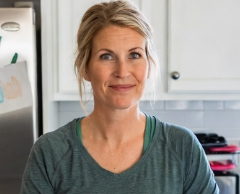
My name is Michelle Larson. I am thirty-four years old. I live in Provo, Utah, with my husband Brandon, who works in corporate accounting, and our five children: Ethan, who is twelve and currently taller than me by two inches and deeply proud of it; Olivia, who is ten and already better at multiplication than I was at fourteen; Mason, who is eight and has Brandon’s eyes and my stubbornness in equal measure; Lily, who is six and the most opinionated human being I have ever met; and Noah, who is three and going through a phase where he will only eat things that are orange. We are working on it.
I make dinner for seven people, six nights a week. On Sundays, I also make the next two or three weeks of dinner, or at least a significant portion of it, because I learned somewhere between Mason and Lily that future-me deserves to eat just as much as present-me does, and future-me is almost always more exhausted.
I want to tell you about the soup. But first I want to tell you where I come from, because the soup makes more sense that way.
I grew up in Orem—twenty minutes north of here, which in Utah counts as a different city—the third of five children in the kind of family that people mean when they say “Utah Mormon,” as though those two words together form their own distinct category of American life. Which maybe they do. My father Gary worked for the Church’s welfare department, managing the bishop’s storehouse—essentially a grocery store for members in need. My mother Denise ran the household like a benevolent CEO: chore charts on the refrigerator, family home evening every Monday without exception, dinner on the table at 6 PM sharp. She was organized and efficient and deeply capable, and she believed with her whole soul that an empty refrigerator was a moral failing on par with an empty testimony.
My mother’s cooking was Utah Mormon cooking, which is its own distinct culinary tradition whether the rest of the country acknowledges it or not. Funeral potatoes—a cheesy hash brown casserole that appears at literally every LDS potluck, funeral, and random Tuesday—were a birthright. Jell-O salad was treated as a vegetable course. She canned peaches every August, made applesauce every October, and kept enough food storage in the basement to last six months, because the Church teaches preparedness and my mother took her tenets seriously. She fed seven people three meals a day on a single income, without a meal planning app or a spreadsheet or a blog. She just knew. She had it in her hands.
I didn’t inherit her certainty. I inherited her system.
I studied accounting at BYU because numbers made sense to me in a way that feelings often didn’t—you put a number in a column, it belongs somewhere specific, there is a correct answer and you either find it or you don’t. I married Brandon in the Provo Temple in 2003 and graduated the following spring already pregnant with Ethan, because the LDS family timeline waits for no diploma. And then the children kept coming—six in eleven years—and I put the accounting career on hold, and somewhere in the exhausted middle of all of it I discovered that batch cooking was the intersection of everything I already knew: the precision of accounting, the generosity of my mother’s kitchen, the preparedness doctrine of a culture that stores six months of food in the basement on principle. I had been trained for this from every direction.
It started with enchiladas. I made a double batch one Sunday when Mason was a baby, put half in the freezer on a whim, and pulled it out three weeks later on a Tuesday when everyone was crying—including me—and I had nothing left to give. Dinner was on the table in thirty minutes. Brandon said, “This is good.” I stood at the counter and thought: I can build a whole system around this feeling.
I have been building it ever since.
This year has been—I am looking for the right word, and the right word keeps being too large or too small. I will just say: we lost someone in January. Our youngest, Grace, who was four months old. SIDS. She was asleep in her crib on a Tuesday afternoon. There is no explanation and no one to blame and nothing to do with the grief except carry it, which is what we have been doing. What I have been doing. Brandon carries it differently—quietly, in the garage after the kids are in bed—but he carries it. We carry it together, which is the only way to carry something that heavy.
I keep a photograph of Grace on the wall above the stove, where I can see it while I cook. It is the only picture I have of her smiling—taken at three months, in the bathtub, soap in her hair, joy on her face. When I cook, I look at it. That is all I can tell you about that. I look at it, and I keep cooking.
The thing that kept me functional in the months after January—that kept me in the kitchen and at the stove and physically present for the five children who still needed their mother—was cooking. Not because cooking heals grief. It doesn’t. Nothing heals grief; grief just slowly changes shape. But cooking is something you do with your hands, and when everything else feels completely beyond your control, there is something steadying about knowing exactly what a chopped onion will do, and what a pot of simmering soup will do, and what a freezer full of labeled bags will do on some future Tuesday when you have nothing left.
Grace taught me that you cannot assume there will always be time. You make the time. You make the meals. You make the love edible and tangible and you put it in the freezer, because tomorrow is not guaranteed, but dinner can be.
So. The taco soup.
I have been making this soup since Olivia was a baby, and it remains the recipe I reach for when I need something fast and cheap and filling and capable of satisfying every single person in my house without negotiation—which is a higher bar than it sounds like when your household includes a three-year-old who will only eat orange things, a six-year-old with strong opinions about texture, and a twelve-year-old who has recently decided that spicy food is a personality trait he would like to develop.
One pot. Thirty-five minutes. Somewhere between ten and twelve dollars for a batch that serves eight generously, depending on what the ground beef looks like at Smith’s this week. The leftovers freeze perfectly—I always double it, always—one batch for dinner tonight and one batch for three weeks from now when Wednesday is trying to beat me and I need dinner ready in the time it takes to boil water.
My mother made something like this, though she would never have called it taco soup. It was just “that hamburger thing” and she made it with whatever cans were already open. I standardized her instincts, because that is what accountants do with instincts: I measured everything until I knew exactly what I was making, and then I made it the same way every time, and then I stopped measuring because the measurements lived in my hands.
There is a packet of ranch dressing mix in this recipe, which I understand may raise questions. It has been in there for eight years and nobody has ever complained. The first rule of Utah Mormon cooking is that ranch dressing mix appears where it is needed and you do not interrogate it. The second rule is mine: you double whatever you’re making and put half in the freezer, labeled with the date, so that future-you has a fighting chance.
The bags are in the freezer now. Dinner tonight is done. I stood at this stove for an hour and looked at that photograph sixteen times, and now eight future Tuesdays have a plan. That is enough for a Sunday. That is enough for right now.
If you’re going to stand at a stove for an hour looking at a photograph sixteen times, you might as well make something worth the effort—and this taco soup is exactly that: uncomplicated, forgiving, and built for feeding a crowd without requiring you to hold it together any more than you already are. It was my mother-in-law’s recipe before it was mine, and now it’s the one I reach for on the Sundays when I need to feel like I have a plan. Here’s how I make it.
Taco Soup — The One-Pot Recipe That Feeds My Family of Seven and Still Leaves Enough for the Freezer
Prep Time: 10 minutes | Cook Time: 25 minutes | Total Time: 35 minutes | Servings: 8
Ingredients
For the soup:- 1 1/2 lbs ground beef (80/20 is fine; ground turkey works too)
- 1 medium yellow onion, diced
- 3 cloves garlic, minced
- 1 can (15 oz) kidney beans, drained and rinsed
- 1 can (15 oz) black beans, drained and rinsed
- 1 can (15 oz) pinto beans, drained and rinsed
- 1 can (15 oz) whole kernel corn, drained
- 1 can (14.5 oz) diced tomatoes, undrained
- 1 can (10 oz) Rotel diced tomatoes with green chilies, undrained
- 2 cups beef broth
- 1 packet (1 oz) taco seasoning
- 1 packet (1 oz) ranch dressing mix
- Salt and black pepper to taste
- Shredded cheddar or Colby-Jack cheese
- Sour cream
- Tortilla chips or corn chips
- Sliced green onions
- Sliced avocado
Instructions
- Brown the beef and onion. Heat a large stockpot or Dutch oven over medium-high heat. Add the ground beef and diced onion and cook, breaking up the meat with a wooden spoon, until the beef is fully browned and the onion is softened, about 8 to 10 minutes. Drain off any excess fat and return the pot to the heat.
- Add the garlic. Stir in the minced garlic and cook for 30 seconds until fragrant.
- Add all remaining ingredients. Pour in the kidney beans, black beans, pinto beans, corn, both cans of tomatoes with their liquid, and the beef broth. Sprinkle the taco seasoning and ranch dressing mix evenly over the top. Stir everything together until fully combined.
- Bring to a boil, then simmer. Increase heat to medium-high and bring the soup to a boil. Reduce heat to medium-low and simmer uncovered for 15 minutes, stirring occasionally, until the flavors have melded and the soup has thickened slightly. Taste and add salt and pepper as needed.
- Serve or freeze. Ladle into bowls and serve hot with toppings of your choice. To freeze: let the soup cool completely, then ladle into quart-sized or gallon-sized zip-top freezer bags. Press out all the air, seal tightly, and lay flat to freeze. Label with contents and date. Good for up to 3 months. To reheat, thaw overnight in the refrigerator and warm on the stovetop over medium heat, or reheat from frozen in a covered pot over low heat, stirring occasionally and adding a splash of broth if needed.
Nutrition (per serving)
Calories: 375 | Protein: 27g | Fat: 11g | Carbs: 39g | Fiber: 10g | Sodium: 830mg