
 By
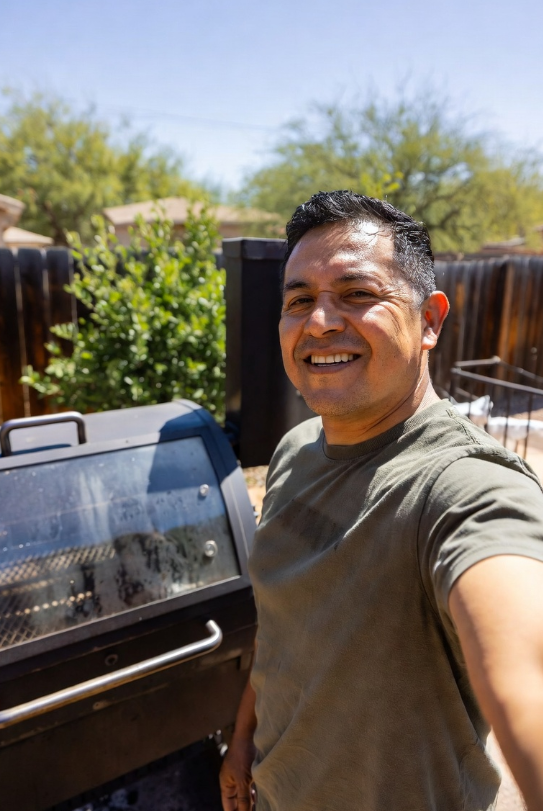
By The brisket was a fourteen-hour masterpiece and I am not being humble about it because humility has no place in brisket. I started at 4 AM Saturday — just salt and pepper, the Texas way, because if your meat is good you don't need to drown it in rubs. Smoked it on the offset at 250 degrees with mesquite wood (couldn't find post oak in Phoenix, which is the one genuine complaint I have about living in the desert). Wrapped it in butcher paper at the stall around hour eight. Pulled it at 6 PM when the probe slid in like butter. Let it rest for an hour in a cooler.
I invited the neighbors. Not formally — I just texted Dave next door and said "brisket at seven if you want it" and Dave told his wife who told her sister who told someone at their church and by 7 PM there were eleven people in my backyard eating brisket with white bread and pickles and my mom's potato salad that she'd brought over because Elena Rivera can sense a cookout from four blocks away.
This is the thing I love about cooking that I can't quite explain to people who don't cook: it's not the food. I mean, the food matters — I'm not going to serve people bad food, I have standards — but the food is the excuse. The real thing is the gathering. Eleven people who wouldn't otherwise be sitting together on a Saturday night, eating with their hands, arguing about whether my brisket is better with mustard sauce or no sauce (no sauce, and this is not up for debate), watching their kids run through the sprinkler in the Phoenix dusk. My dad taught me this. You put food out, people come. People come, something happens. Call it community, call it fellowship, call it whatever. It's the reason I cook.
Sofia was a hit, as usual. She's walking now — not well, but walking — and she spent the entire evening toddling between adults with her arms up, demanding to be held by whoever she'd decided was her current favorite. She ate brisket. My eighteen-month-old daughter ate smoked brisket, and she liked it, and if that's not proof that genetics are real then I don't know what is.
Jessica was happy. I could tell because she was laughing at Dave's terrible jokes, which she only does when she's genuinely relaxed. The fight from two weeks ago feels distant. Not resolved — it's never really resolved, the schedule thing — but managed. We're managing. That's what marriage is after three years: not solving problems but managing them, and finding the moments between the problems where you can sit in the backyard with people you love and eat something you made with your hands.
Brisket isn’t a weeknight decision—it’s a commitment, the kind you make when you need the day to mean something. After two weeks of feeling like Jessica and I were circling each other, I wanted to do something that required patience and produced something real. This is the brisket I made that afternoon, the one Sofia couldn’t stop eating, the one that sat in the smoker while I remembered why I do any of this.
Texas-Style Salt and Pepper Smoked Brisket
Prep Time: 20 minutes | Cook Time: 14 hours | Rest Time: 1 hour | Total Time: 15 hours 20 minutes | Servings: 14–16
Ingredients
- 1 whole packer brisket, 14–16 lbs (flat and point intact, untrimmed)
- 1/4 cup coarse kosher salt
- 1/4 cup coarse black pepper (16-mesh or freshly cracked)
- Mesquite or post oak wood chunks or splits, enough for 14 hours of smoke
- White sandwich bread, yellow mustard, dill pickles, and sliced white onion, for serving
Instructions
- Trim the brisket. The night before, trim the fat cap to approximately 1/4 inch thickness. Remove any hard fat deposits on the underside that won’t render down during the cook. Pat the brisket completely dry with paper towels.
- Season. Combine the salt and pepper in equal parts — this is your entire rub. Coat the brisket generously and evenly on all sides, pressing the seasoning into the surface. Do not be shy. Place uncovered on a wire rack in the refrigerator overnight, or season and cook immediately.
- Fire the smoker. At 4 AM (or the early morning of your cook day), bring your offset smoker to a steady 250°F. Use mesquite or post oak. Maintain a clean, thin blue smoke — not thick white smoke, which will make the meat bitter.
- Place and smoke. Set the brisket fat-side up on the smoker, point end toward the firebox. Close the lid and do not open it for the first two hours. Maintain 250°F throughout by managing your fire. Add wood every 45–60 minutes as needed.
- Navigate the stall. Around hour 7 or 8, the internal temperature will plateau anywhere between 155°F and 170°F and may not budge for 2–3 hours. This is normal. Do not raise the temperature. When the stall begins, wrap the brisket tightly in two layers of butcher paper (not foil — foil traps steam and softens the bark).
- Finish the cook. Return the wrapped brisket to the smoker. Continue cooking until the internal temperature in the thickest part of the flat reaches 200–205°F and a probe or thermometer slides in with zero resistance — like pushing into softened butter, with no tension at all. This is your doneness cue, not the temperature number alone.
- Rest. This step is not optional. Wrap the brisket in a towel and place it in a dry cooler for a minimum of one hour, ideally two. The rest allows the juices to redistribute and the collagen to fully set. Skipping this step means dry slices.
- Slice and serve. Separate the flat from the point by cutting along the fat seam between them. Slice the flat against the grain into 1/4-inch pencil slices. The point can be sliced or cubed into burnt ends. Serve immediately on butcher paper with white bread, pickles, and sliced onion. Sauce is optional and widely debated.
Nutrition (per serving, approximately 6 oz sliced brisket)
Calories: 480 | Protein: 52g | Fat: 28g | Carbs: 1g | Fiber: 0g | Sodium: 620mg