
 By
By A cold snap this week — twenty-eight overnight, which is cold for Portland. The pipes held. Yoga Tuesday and Thursday at the studio. The classes were full. The body was the body.
Miya, 9, can shape onigiri without falling apart. She uses wet hands. She knows the order without being told. Barbara called Sunday. We talked for twenty minutes. She told me about the play she is directing. I told her about the kitchen.
Nimono Sunday. Daikon, carrots, lotus root, taro. The slow simmer in dashi and soy and mirin. The vegetables tender by the time they reached the bowl.
The chipped bowl. The chain extends.
I wrote at the kitchen table from six to eight. The newsletter was forming. The opening sentence was the hard sentence — they always are. I rewrote it five times. The fifth time was the right time.
Miya is in elementary school. The Saturday Japanese school continues. She still complains. She is still going.
Miya's old room is now my office. The desk is by the window. The shiso outside. The newsletter in progress. The afternoons are quiet.
Made dashi at five-thirty AM. Ten minutes in the kitchen alone with the kombu and the bonito flakes. The day's first prayer.
The rain in long sheets Tuesday afternoon. I made tea. I watched it from the porch. The cottonwoods on the next block were silver in the wet.
I made onigiri for tomorrow's lunch. Three triangles. Salted plum in the center. Wrapped in nori. The cling wrap. The drawer where I keep them. The system.
I drove to Uwajimaya Wednesday. Kombu, bonito flakes, white miso, a small bag of mochiko for tomorrow's project. The store smells like home.
A panic flicker Tuesday evening, brief, manageable. I breathed. I drank water. I went outside and walked around the block. The flicker passed. The body did its work.
The neighbor's dog barked at nothing for twenty minutes Sunday afternoon. The neighbor apologized. I told him I had been writing through it and the white noise was helpful. He laughed.
Coffee with a friend Saturday morning. We talked about books, about kids, about the way our forties became our fifties. The talking is the thing.
Therapy Tuesday. We talked about the wedding. We talked about Barbara. We talked about Fumiko. The hour passed. The work continues.
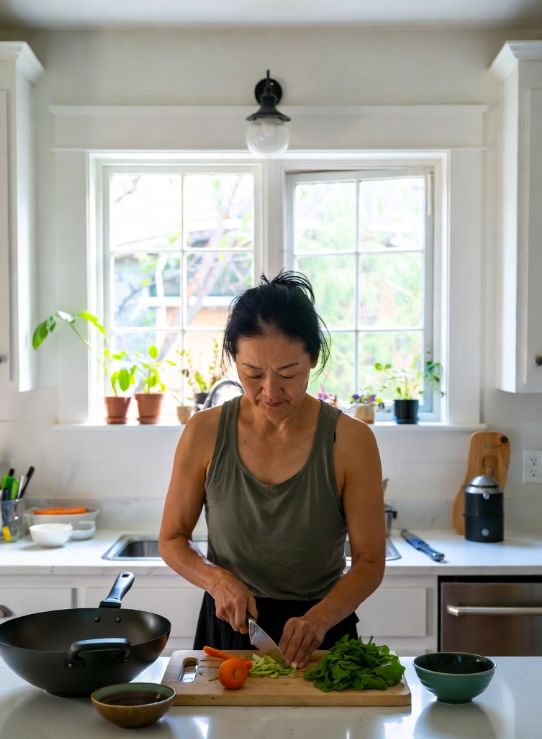
I cleaned the kitchen Sunday afternoon. Wiped the counters. Reorganized the drawer where the chopsticks live. Sharpened the knife. The reset was the reset.
The cat was the cat. Mochi at fifteen sleeps most of the day. She still eats with enthusiasm. She still sits at the kitchen window watching the back garden.
A reader sent me a handwritten card this week. Her grandmother had cooked Japanese food in 1970s Boise. She had felt alone in it. The newsletter, she wrote, made her feel less alone. I taped the card to the wall above my desk.
Yoga Tuesday morning. The studio in Sellwood. Eight students. The class was the class.
I read for an hour Sunday night. A book of essays by a Korean-American writer about food and grief. I underlined a paragraph that said exactly what I had been trying to say in the newsletter for months.
I texted Miya a photo of the shiso. She texted back a heart and a single word: home.
Sunday farmers market in the rain. The vendors knew me. The Hood River apple stand had honeycrisps. I bought four pounds.
Tomi watered the garden Saturday morning. The shiso was head-high. The shishito peppers were producing. The kabocha was running on the fence.
After Sunday’s market in the rain — the vendors who knew my name, the honeycrisps I carried home in both arms — I found myself reaching not for the dashi pot but for the tomatoes, because sometimes the week has already given you the slow simmer and what you need at the end of it is something cool, bright, and almost effortless. Tomatoes with vinaigrette is the dish I make when I want to taste what the earth actually did, when I don’t want to transform anything. The chipped bowl. The good oil. The chain extends.
Tomatoes with Vinaigrette
Prep Time: 10 min | Cook Time: 0 min | Total Time: 10 min | Servings: 4
Ingredients
- 4 medium ripe tomatoes (about 2 lbs), cored and sliced 1/4 inch thick
- 3 tablespoons good olive oil
- 1 tablespoon red wine vinegar
- 1 teaspoon Dijon mustard
- 1 small shallot, finely minced
- 1 small clove garlic, minced or grated
- 1/4 teaspoon fine sea salt, plus more to taste
- Freshly ground black pepper
- 2 tablespoons fresh flat-leaf parsley, roughly chopped
Instructions
- Arrange the tomatoes. Lay the tomato slices in a single overlapping layer on a wide, shallow plate or serving platter. Season lightly with salt and let them rest for 5 minutes — they will begin to release a little juice, which will combine with the dressing.
- Make the vinaigrette. In a small bowl or jar, whisk together the olive oil, red wine vinegar, and Dijon mustard until emulsified. Stir in the minced shallot and garlic. Season with salt and several grinds of black pepper. Taste and adjust — it should be bright and slightly sharp.
- Dress the tomatoes. Drizzle the vinaigrette evenly over the sliced tomatoes. Tilt the plate gently so the dressing runs into the gaps.
- Rest briefly, then serve. Let the dressed tomatoes sit at room temperature for 5 to 10 minutes before serving. Scatter the chopped parsley over the top. Serve as a side or alongside good bread to catch the juices.
Nutrition (per serving)
Calories: 110 | Protein: 1g | Fat: 10g | Carbs: 6g | Fiber: 1g | Sodium: 95mg