
 By
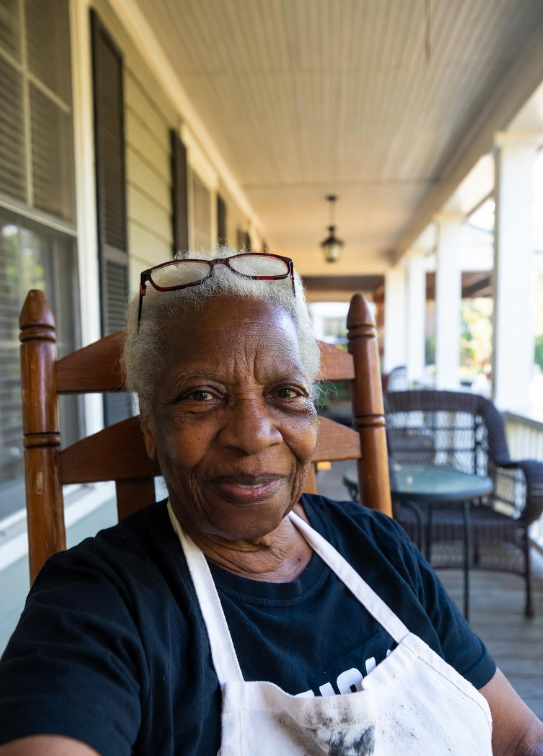
By The community center asked me to teach a spring cooking class series — not the usual four weeks, but eight. Eight weeks. Double the sessions, double the recipes. They said the demand is there — the waiting list from the last series had forty names on it, and the newspaper article brought in more interest. I said yes because I cannot say no to a room full of people who want to learn how to cook. That would be like saying no to oxygen.
The expanded menu: shrimp and grits, she-crab soup, Frogmore stew, peach cobbler (the originals), plus four new sessions — red rice (Gullah-Geechee history), fried green tomatoes, chicken bog, and okra soup (Pearl's recipe from Sapelo). Eight dishes. Eight stories. Eight chances to pass the tradition to another set of hands.
Kayla offered to assist — not teach, assist. She'll be my sous-chef, my second pair of hands, the one who preps while I talk. I said, "Baby, someday you'll teach this class." She said, "Not yet, Granny. I'm still learning." She's not still learning. She's been cooking my recipes for four years. But she has the wisdom to know that standing beside me at the stove is different from standing alone, and she wants more time at my side. I understand. I wanted more time at Mama's side too. I didn't get enough. Nobody ever gets enough.
Made okra soup tonight — Pearl's recipe, or my approximation of it, from the Sapelo Island visit and Miss Cornelia's porch. The okra was from the freezer (garden won't produce until July), but the flavor was right — the slow simmer, the crab, the depth that comes from a recipe that has been made by a hundred hands before mine. The class will love it. The class will taste Sapelo without knowing they're tasting Sapelo. That's the magic.
Now go on and feed somebody.
After a night of standing over Pearl’s okra soup and tasting Sapelo in my own kitchen, I woke up still thinking about the water—the way coastal cooking carries salt and memory in equal measure. When I need something that moves quick but still honors that same seaside spirit, I reach for this Tropical Tilapia: bright citrus, sweet fruit, a little heat, and a fish that soaks up every bit of it. It’s not Gullah-Geechee, but it speaks the same language—simple, honest, and made to feed people you love. Kayla will be making this one right alongside me before the summer’s out.
Tropical Tilapia
Prep Time: 15 min | Cook Time: 20 min | Total Time: 35 min | Servings: 4
Ingredients
- 4 tilapia fillets (about 6 oz each)
- 1 cup fresh or canned pineapple chunks, drained
- 1 mango, peeled and diced
- 1/2 red bell pepper, finely diced
- 1/4 cup red onion, finely chopped
- 2 tablespoons fresh cilantro, chopped
- 3 tablespoons fresh lime juice, divided
- 1 tablespoon olive oil
- 1 teaspoon ground cumin
- 1/2 teaspoon garlic powder
- 1/4 teaspoon cayenne pepper
- Salt and black pepper to taste
- Lime wedges, for serving
Instructions
- Make the tropical salsa. Combine pineapple, mango, red bell pepper, red onion, cilantro, and 2 tablespoons lime juice in a medium bowl. Season lightly with salt, stir to combine, and refrigerate while you prepare the fish.
- Season the fillets. Pat tilapia fillets dry with paper towels. In a small bowl, mix cumin, garlic powder, cayenne, 1/2 teaspoon salt, and 1/4 teaspoon black pepper. Rub the spice mixture evenly over both sides of each fillet.
- Sear the tilapia. Heat olive oil in a large skillet over medium-high heat until shimmering. Add fillets in a single layer and cook 3 to 4 minutes per side, until golden and the fish flakes easily with a fork. Do not crowd the pan—work in batches if needed.
- Finish and plate. Drizzle remaining 1 tablespoon lime juice over the cooked fillets. Spoon the chilled tropical salsa generously over each piece and serve immediately with lime wedges alongside.
Nutrition (per serving)
Calories: 225 | Protein: 34g | Fat: 6g | Carbs: 15g | Fiber: 2g | Sodium: 290mg