
 By
By Valentine's Day. Brian cooked with me. He actually did it — came home at five, put on an apron (my apron, the one with the Japanese wave pattern, which looked absurd on his six-foot frame), and said, "What are we making?" I chose something simple and shareable: temaki sushi. Hand rolls. Because hand rolls require assembly, not skill, and assembly is something Brian can do. The competitive part of his brain engaged immediately — he wanted his rolls to be better than mine, tighter, neater, more aesthetically pleasing. They were not. But the effort was real and the kitchen was warm and Miya sat in her high chair watching her parents cook together and clapped, which might have been encouragement or might have been hunger but either way was the right response.
We sat at the table and ate our hand rolls and I looked at Brian across the nori and the rice and I saw the man I married — not the four-beers man, not the absent man, but the original man, the farmers market man, the one who asked about shiso with genuine curiosity and held my hand in the rain and made me laugh in a way that felt like sunlight in a dark room. He was there. Under the beer and the distance and the years, he was there. I saw him. For one evening, I saw him.
After dinner, after Miya was in bed, we sat on the couch and did not turn on the TV. We just talked. About Fumiko — I told him about the visit, about her slowing down, about the fear that sits in my chest like a stone. He listened. He did not say "she will be fine" or "try not to worry" or any of the phrases that people say when they do not understand anxiety. He just listened. And then he said, "I am sorry I am not there for you the way you need." It was the most honest thing Brian Callahan has said in three years of marriage. I held his hand. I did not let go for a long time.
Valentine's Day is usually a performance. This one was not. This one was two people in a kitchen, making food with their hands, telling each other the truth for one evening. It was not enough to fix anything. It was enough to remember why fixing is worth trying. I am writing this down because the good moments are the ones the anxiety erases first, and I want this one preserved in ink, evidence against the dark: we were good together, once, on a Tuesday in February, with nori on our fingers and honesty between us.
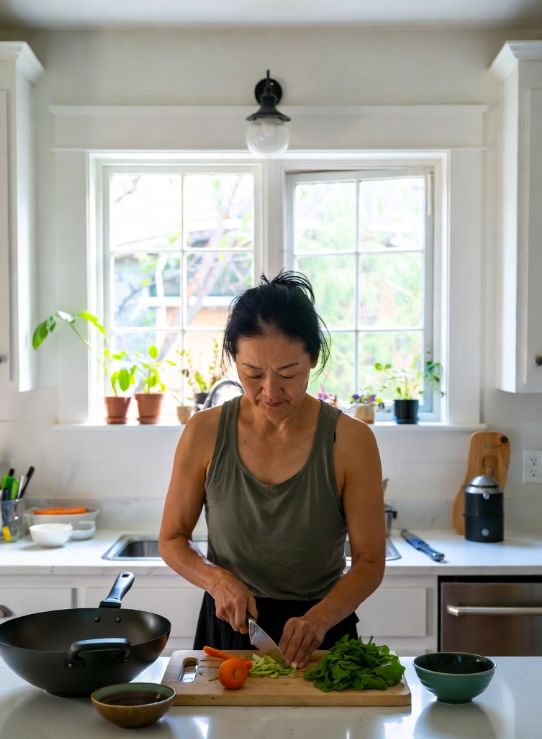
Hand rolls ask you to use your hands, and that’s what made that Valentine’s evening feel real — the nori, the rice, the reaching across a table to pass something to someone you love. This salad lives in the same spirit: forbidden black rice that takes its time, watercress that bites back a little, and a ginger vinaigrette with enough sharpness to keep you honest. I make it when I want a meal that requires presence, not performance — the kind of thing you build together at the counter, tasting as you go, saying more with the act of cooking than with anything you could script. It belongs to evenings like that one: ordinary, imperfect, and quietly worth preserving.
Watercress and Forbidden Rice Salad with Ginger Vinaigrette
Prep Time: 15 minutes | Cook Time: 35 minutes | Total Time: 50 minutes | Servings: 4
Ingredients
- 1 cup forbidden (black) rice
- 2 cups water
- 1/2 teaspoon kosher salt, plus more to taste
- 4 cups fresh watercress, thick stems trimmed
- 1 cup shredded red cabbage
- 1 large carrot, peeled and julienned or coarsely grated
- 3 green onions, thinly sliced
- 1/2 cup shelled edamame, thawed if frozen
- 2 tablespoons toasted sesame seeds
- 1 small avocado, sliced (optional)
Ginger Vinaigrette:
- 3 tablespoons rice vinegar
- 2 tablespoons low-sodium soy sauce
- 1 tablespoon toasted sesame oil
- 1 tablespoon honey or maple syrup
- 1 teaspoon fresh ginger, finely grated
- 1 small garlic clove, minced
- 2 tablespoons neutral oil (such as avocado or canola)
- 1 teaspoon sriracha or chili garlic sauce (optional)
Instructions
- Cook the rice. Rinse the forbidden rice under cold water until the water runs nearly clear. Combine with 2 cups water and 1/2 teaspoon salt in a medium saucepan. Bring to a boil over high heat, then reduce to low, cover, and simmer for 30–35 minutes until the water is fully absorbed and the rice is tender. Remove from heat and let steam, covered, for 5 minutes. Spread onto a sheet pan or wide bowl to cool slightly.
- Make the vinaigrette. Whisk together the rice vinegar, soy sauce, sesame oil, honey, grated ginger, and garlic in a small bowl. Drizzle in the neutral oil while whisking until emulsified. Add sriracha if using. Taste and adjust salt or vinegar as needed.
- Prep the vegetables. While the rice cools, trim the watercress, shred the cabbage, julienne the carrot, and slice the green onions. Have everything ready at the counter so assembly goes quickly — this is a salad that rewards moving at your own pace.
- Dress the rice. Toss the warm (not hot) rice with 2–3 tablespoons of the vinaigrette. Allowing the rice to absorb some dressing while it’s still slightly warm deepens the flavor throughout.
- Assemble the salad. Spread the watercress and red cabbage across a wide serving platter or divide among four bowls. Spoon the dressed rice over the top. Scatter the carrot, edamame, green onions, and avocado slices over everything. Drizzle with remaining vinaigrette to taste.
- Finish and serve. Sprinkle generously with toasted sesame seeds. Serve immediately while the rice is still slightly warm and the watercress retains its crisp texture.
Nutrition (per serving)
Calories: 340 | Protein: 9g | Fat: 13g | Carbs: 48g | Fiber: 5g | Sodium: 420mg